Cover image

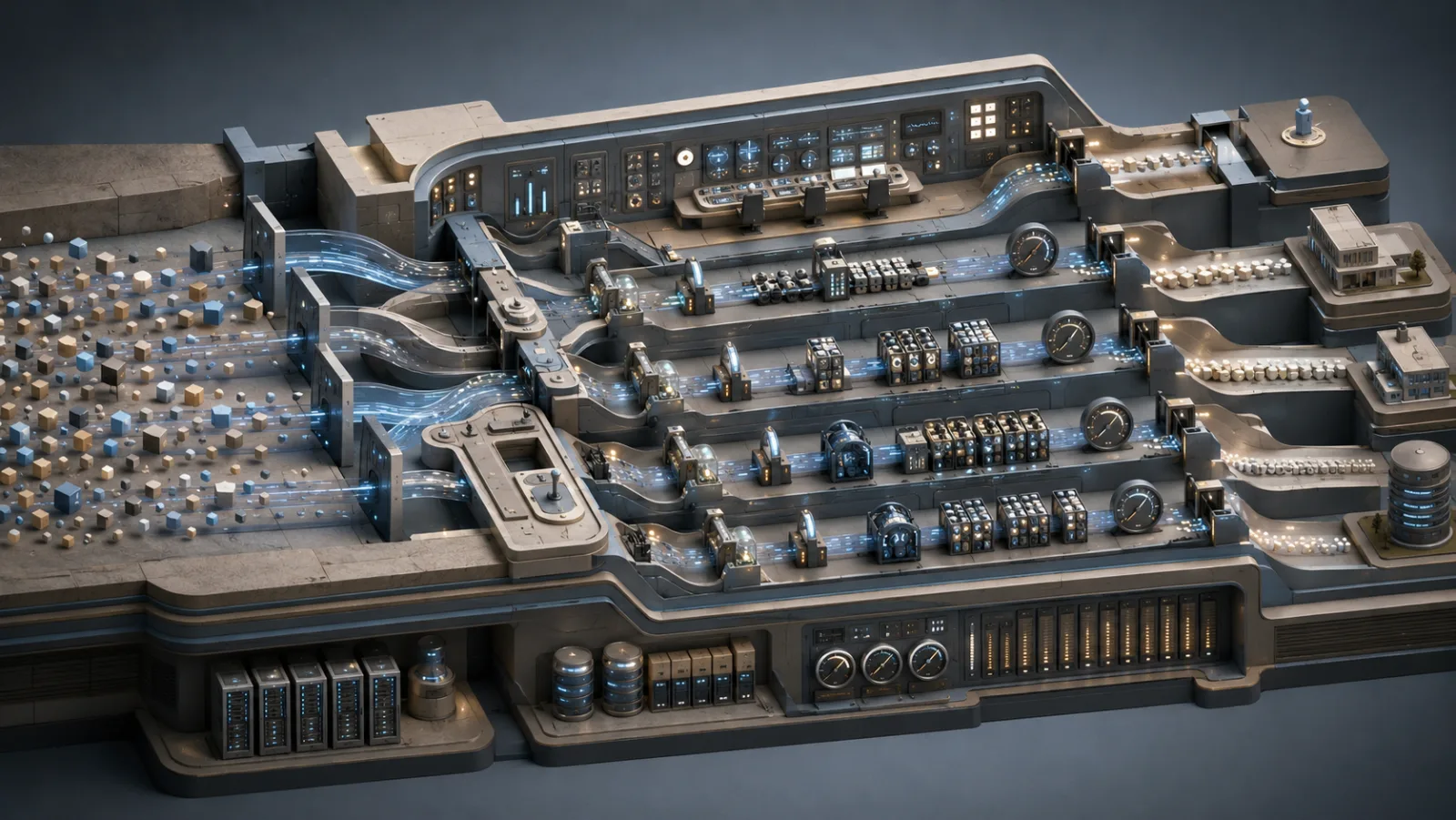
Blue Data Intelligence Layer: When SQL Meets Agents and Reality

Enterprise AI usually begins with a deceptively simple request: ask the system a business question and get an answer. Then reality enters, politely carrying a knife. The relevant data is not in one table. The schema is incomplete. The user’s intent depends on personal preference. A term such as “Bay Area” needs external knowledge. A PDF, a web page, an image, and a database record all matter. Someone wants the answer explained, filtered, joined, visualized, and revised after a follow-up question. The demo looked like a chatbot; the production requirement looks suspiciously like distributed systems engineering. ...

April 20, 2026 · 15 min · Zelina
Cover image

When AI Gets the Joke: Why Reasoning Beats Scale in Multimodal Humor

The joke is not the punchline Humor is a useful humiliation device for artificial intelligence. A model can summarize earnings calls, draft policy memos, and explain SQL joins with the confidence of a very expensive intern. Then it looks at a cartoon, reads five captions, and selects the one that sounds plausible but misses the joke entirely. Not because the grammar is hard. Not because the image has too many pixels. Because humor requires the model to notice that something is off, infer why it is off, and decide which caption resolves that mismatch in a way humans actually find satisfying. ...

April 20, 2026 · 18 min · Zelina
Cover image

Memory Lane Meets Mainframe: Why Coding Agents Need Better Memories, Not Bigger Egos

Memory is a familiar word. That is exactly why it can mislead us. When people hear that coding agents need “memory,” the first image is often a giant scrapbook: past prompts, previous patches, command logs, successful code snippets, failed attempts, and whatever else the agent has dragged behind it like a very confident intern with a messy backpack. More memory sounds safer. More traces sound more useful. More remembered work sounds like less repeated work. ...

April 16, 2026 · 17 min · Zelina
Cover image

The Memory Isn’t Broken — It’s Flat: Why LLMs Need to ‘Draw’ to Remember

Memory is usually sold as a storage problem. Give the agent a vector database. Add a recall layer. Save summaries. Search harder. Expand the context window until the budget department starts making eye contact. Then ask the agent a simple question: what changed after the earlier conversation? That is where the polite demo often turns into a fog machine. ...

April 15, 2026 · 15 min · Zelina
Cover image

Epistemic Infrastructure: Why Your AI Knows Less Than It Thinks

Documents are rarely wrong in the same way. A project proposal can be relevant but obsolete. A meeting note can be accurate but non-binding. A market-size estimate can be useful but contradicted by later due diligence. A regulatory question can be unanswered and still more important than a polished paragraph that sounds certain. This is the small, boring, expensive problem hiding inside many enterprise AI deployments: the system finds the right files, then treats unlike things as if they had the same authority. ...

April 14, 2026 · 15 min · Zelina
Cover image

Anchors Away: Rethinking How AI Agents Learn to Use Tools

A tool-using AI agent usually fails in a very ordinary way. It does not announce a philosophical crisis. It calls the wrong tool, calls the right tool too many times, writes malformed code, searches before thinking, or confidently takes a useless action because the training process rewarded motion rather than judgment. This is the unglamorous part of agent deployment. The demo shows the agent booking, searching, calculating, and reporting. The training log shows wasted exploration, unstable optimization, and a strange habit of confusing “using tools” with “thinking better.” Apparently, giving a model a calculator does not automatically make it an accountant. Shocking. ...

April 13, 2026 · 17 min · Zelina
Cover image

One Point to Rule Them All: Why AI Optimization Is Quietly Abandoning the Pareto Frontier

Decision teams rarely ask for a beautiful frontier. They ask for a choice. A product team needs one configuration to ship. A materials lab needs one candidate to synthesize next. A vehicle design team needs one design worth sending through another expensive simulation. A trading infrastructure team needs one setting that balances latency, risk, and cost. Nobody walks into the Monday meeting and says, with a straight face, “Please deploy the entire trade-off surface.” At least not twice. ...

April 13, 2026 · 18 min · Zelina
Cover image

The Monoculture Trap: When AI Coordinates Too Well

AI agents are excellent at finding the obvious answer. That sounds like a compliment until the task is to avoid everyone else’s obvious answer. Imagine three firms using AI assistants to screen applicants, forecast demand, or decide which customer segments deserve attention. If the goal is consistency, shared focal points are useful. Everyone reads the same policy, applies similar criteria, and avoids the usual mess of human improvisation. Lovely. The spreadsheet smiles. ...

April 13, 2026 · 18 min · Zelina
Cover image

Dead Weights, Live Signals: When Frozen Models Start Talking

A model is usually treated like a finished machine. You send text in, get text out, and pretend the interesting part happens somewhere behind a curtain. If the answer is weak, the industry has a familiar menu: prompt harder, fine-tune, route to a bigger model, or pay the tax of yet another orchestration layer. Very elegant, in the way a pile of adapters behind a monitor is elegant. ...

April 12, 2026 · 17 min · Zelina
Cover image

Seeing the Trees, Not Just the Forest: Why Instance-Aware AI Changes Everything

A camera sees a warehouse aisle. A worker reaches for a box. A forklift passes behind him. A package shifts on the shelf. A normal vision-language model can probably describe the scene. It may say, quite reasonably, that a worker is handling inventory while a vehicle moves nearby. That is not useless. It is also not enough. ...

April 12, 2026 · 15 min · Zelina