Cover image

ODEs Without the Drama: How FPGAs Finally Make Physical AI Practical at the Edge

Opening — Why this matters now Edge AI has matured—at least on paper. We have better sensors, cheaper compute, and increasingly autonomous systems deployed in environments where cloud connectivity is unreliable or unacceptable. Yet one category of intelligence has stubbornly refused to move out of the lab: physical AI—systems that understand and recover the governing dynamics of the real world rather than merely fitting curves. ...

January 4, 2026 · 4 min · Zelina
Cover image

Memory Over Models: Letting Agents Grow Up Without Retraining

Opening — Why this matters now We are reaching the awkward teenage years of AI agents. LLMs can already do things: book hotels, navigate apps, coordinate workflows. But once deployed, most agents are frozen in time. Improving them usually means retraining or fine-tuning models—slow, expensive, and deeply incompatible with mobile and edge environments. The paper “Beyond Training: Enabling Self-Evolution of Agents with MOBIMEM” takes a blunt stance: continual agent improvement should not depend on continual model training. Instead, evolution should happen where operating systems have always handled adaptation best—memory. ...

December 20, 2025 · 4 min · Zelina
Cover image

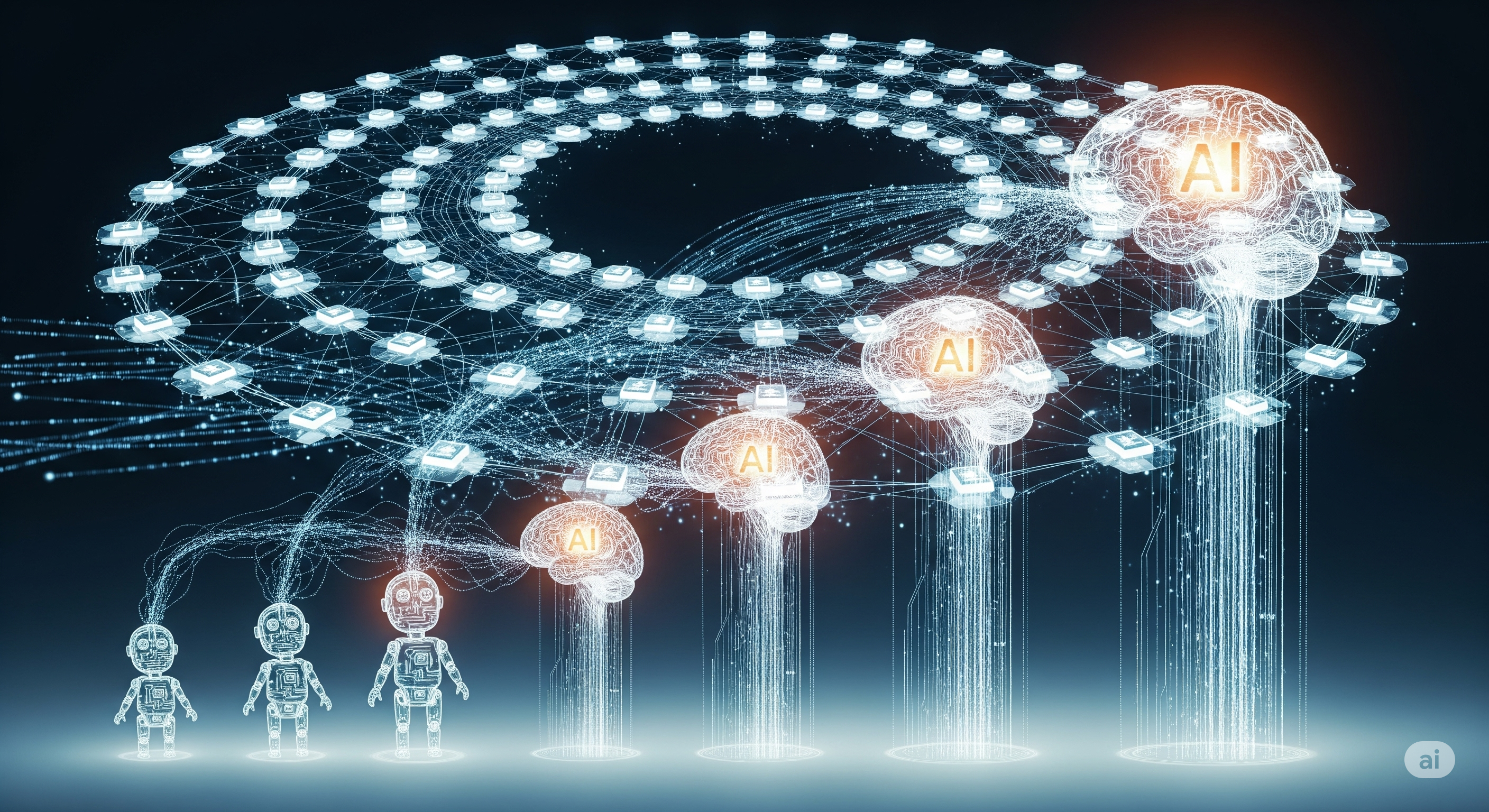
From Tadpole to Titan: How DEVFT Grows LLMs Like a Brain

If federated fine-tuning feels like trying to teach calculus to a toddler on a flip phone, you’re not alone. While the privacy-preserving benefits of federated learning are clear, its Achilles’ heel has always been the immense cost of training large models like LLaMA2-13B across resource-starved edge devices. Now, a new method—DEVFT (Developmental Federated Tuning)—offers a compelling paradigm shift, not by upgrading the devices, but by downgrading the expectations. At least, at first. ...

August 4, 2025 · 3 min · Zelina
Cover image

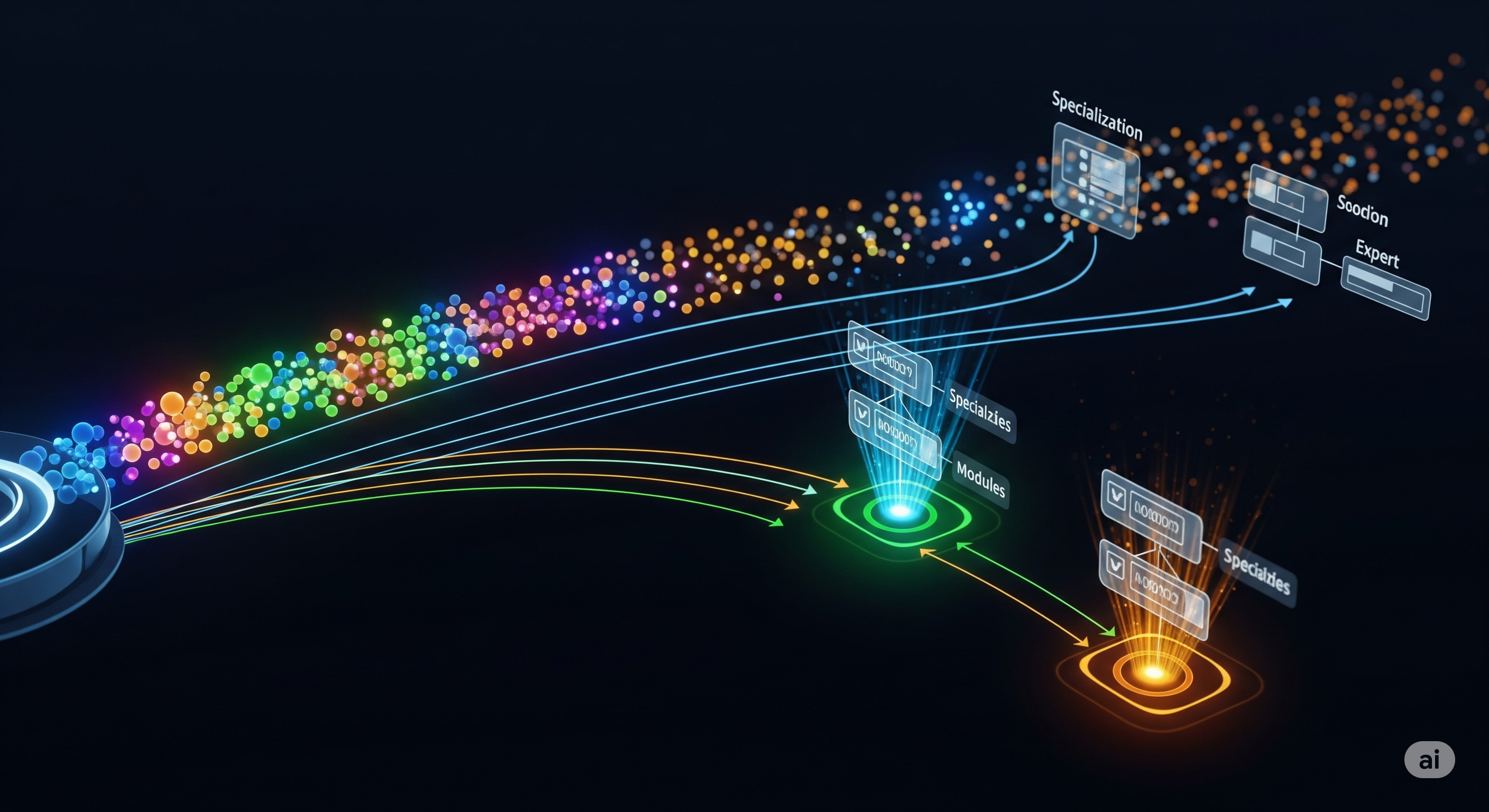
Divide, Route, and Conquer: DriftMoE's Smart Take on Concept Drift

Concept drift is the curse of the real world. Models trained on yesterday’s data go stale in hours, sometimes minutes. Traditional remedies like Adaptive Random Forests (ARF) respond reactively, detecting change and resetting trees. But what if the system could instead continuously learn where to look, dynamically routing each new sample to the right expert — no drift detector required? That’s exactly the ambition behind DriftMoE, a Mixture-of-Experts framework purpose-built for online learning in non-stationary environments. Co-developed by researchers at Ireland’s CeADAR, this architecture marries lightweight neural routing with classic Hoeffding trees, achieving expert specialization as a byproduct of learning — not as a bolted-on correction. ...

July 27, 2025 · 3 min · Zelina
Cover image

Smart Moves: How SmartPilot is Revolutionizing Manufacturing with a Multiagent CoPilot

In the rapidly evolving landscape of Industry 4.0, manufacturing environments face significant pressure to enhance productivity, reduce downtime, and swiftly adapt to changing operational conditions. Amid these challenges, SmartPilot, a sophisticated AI-based CoPilot developed by the University of South Carolina’s AI Institute, emerges as a groundbreaking solution, combining predictive analytics, anomaly detection, and intelligent information management into a unified, neurosymbolic multiagent system. What Exactly Is SmartPilot? SmartPilot is a novel, intelligent CoPilot system specifically designed to support and optimize manufacturing operations. Unlike traditional systems that function independently, SmartPilot employs a multiagent architecture that integrates three specialized AI agents into one cohesive and cooperative ecosystem: ...

May 14, 2025 · 4 min