Cover image

The Music Knob Needed a Feedback Loop

TL;DR for operators Music-generation interfaces usually want knobs: more bright, less dense, higher register, shorter phrases, something vaguely called “cinematic” because apparently we have not suffered enough. The problem is that a knob is not a controller. A knob sets a strength. A controller watches whether the system actually moved. The paper’s central contribution is Temporal PID for Sparse Activation Steering in symbolic music generation.1 The authors identify a specific failure mode: when Sparse Activation Steering tries to ramp gradually, small fractional interventions can be erased by the Sparse Autoencoder’s Top-K re-sparsification step. The product team thinks it asked for “a smooth transition.” The sparse representation hears: “nothing happened, carry on.” ...

July 8, 2026 · 19 min · Zelina
Cover image

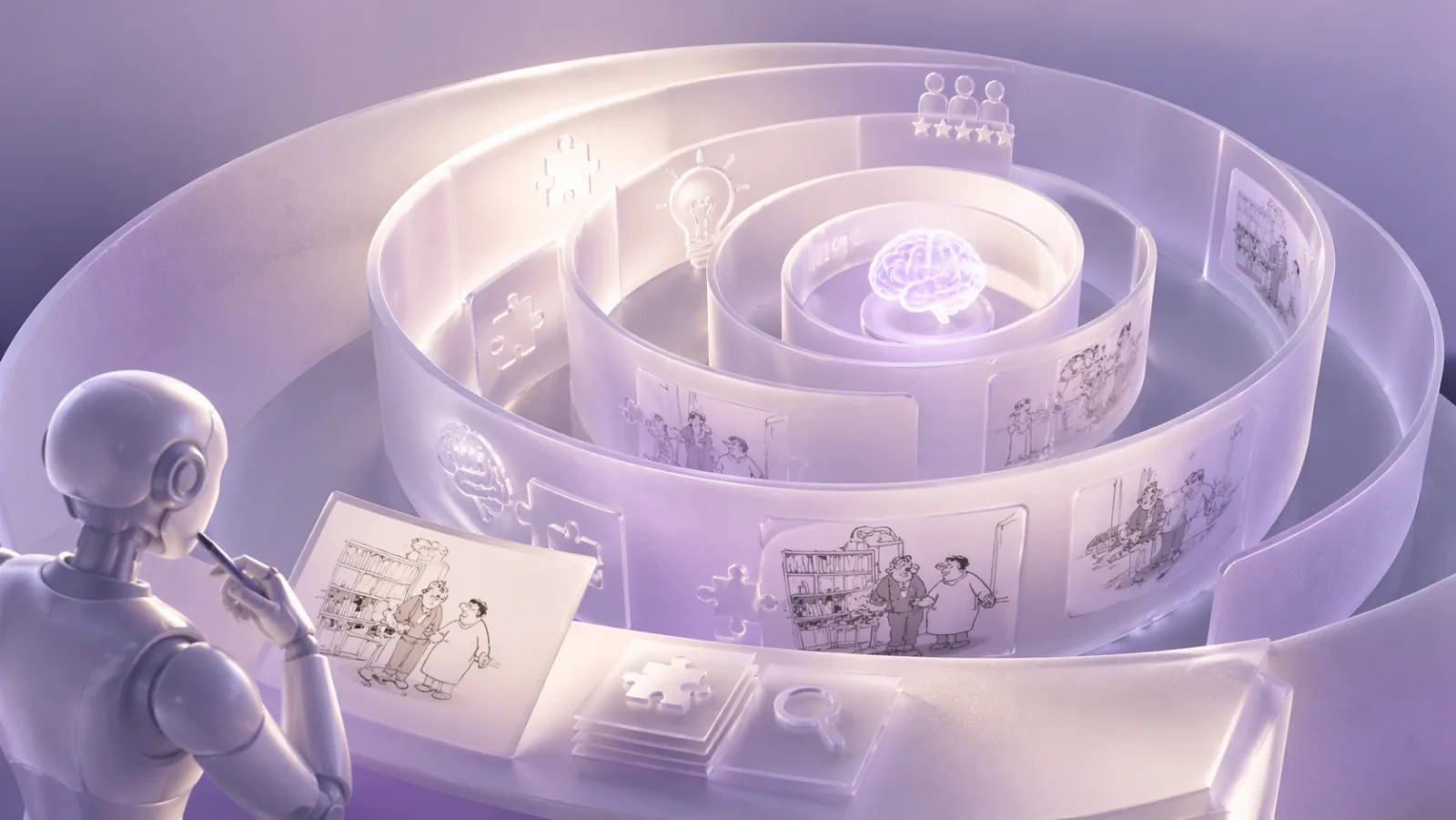
When AI Gets the Joke: Why Reasoning Beats Scale in Multimodal Humor

The joke is not the punchline Humor is a useful humiliation device for artificial intelligence. A model can summarize earnings calls, draft policy memos, and explain SQL joins with the confidence of a very expensive intern. Then it looks at a cartoon, reads five captions, and selects the one that sounds plausible but misses the joke entirely. Not because the grammar is hard. Not because the image has too many pixels. Because humor requires the model to notice that something is off, infer why it is off, and decide which caption resolves that mismatch in a way humans actually find satisfying. ...

April 20, 2026 · 18 min · Zelina
Cover image

When the Muse Has a GPU: Teaching a Machine to Write Poetry

Poetry is a useful place to test the limits of AI, partly because the task is so easy to misunderstand. A bad poem can be fluent. A decent poem can be vague. A machine can produce both before breakfast, along with a motivational LinkedIn post and three flavors of executive summary. That is not the interesting part. ...

February 19, 2026 · 18 min · Zelina
Cover image

LoRA, But Make It Legible: How CARLoS Turns Chaos into Retrieval Signal

LoRA marketplaces have a familiar business problem hiding inside an unfamiliar technical wrapper: the shelf labels are terrible. A creator uploads an adapter with a catchy name, a handful of sample images, maybe a description, maybe not. A user searches for “vibrant colors,” “pencil sketch,” “cyberpunk lighting,” or “kimono inspired.” The platform returns whatever its text search thinks is nearby. Sometimes that works. Often it does the digital equivalent of recommending a “Coloring Book” LoRA when the user wanted a graphite sketch. Charming, in the same way a vending machine full of unlabeled cans is charming. ...

December 10, 2025 · 17 min · Zelina
Cover image

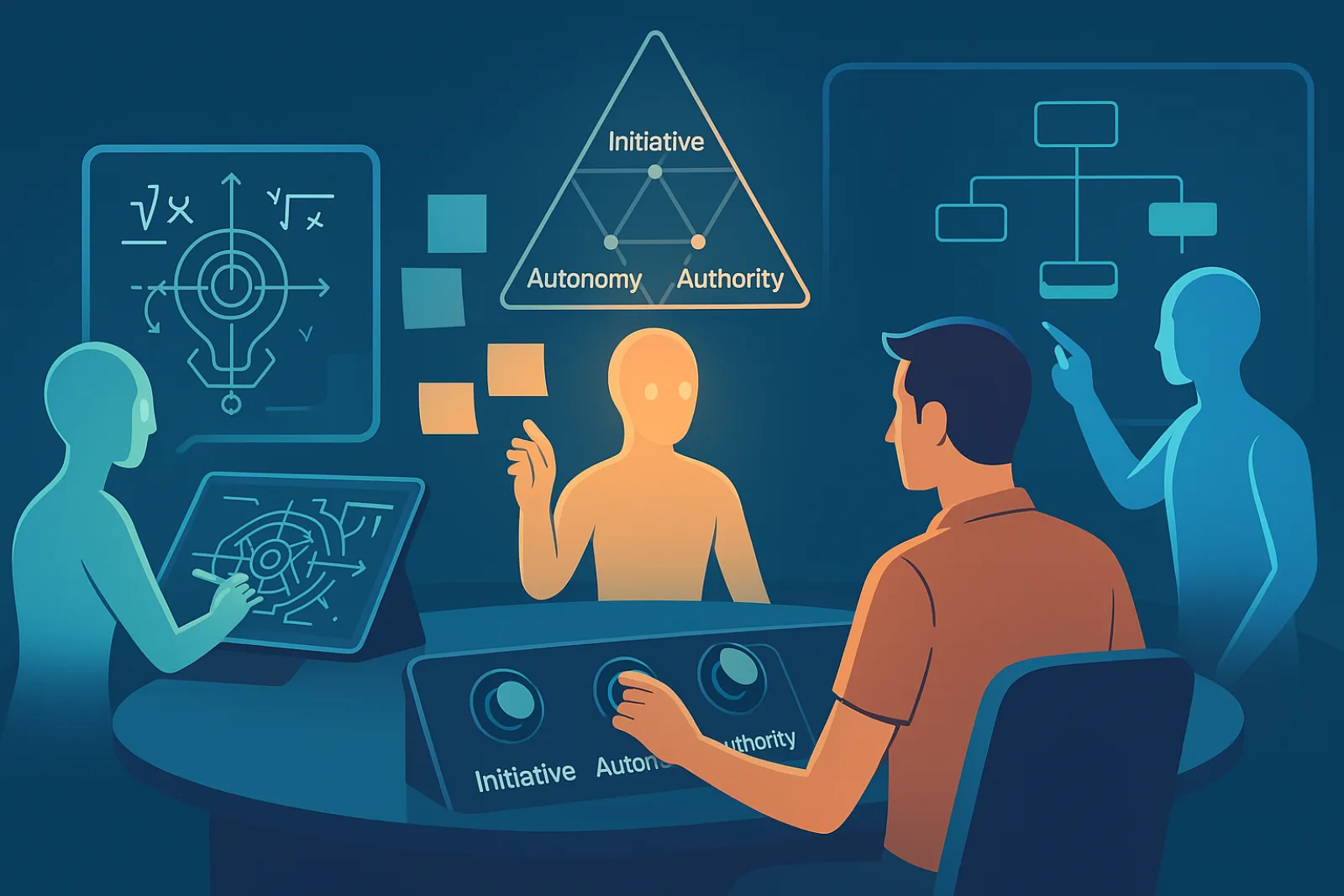
The Art of Control: Balancing Autonomy, Authority, and Initiative in Human-AI Co-Creation

TL;DR for operators Most AI product debates still treat “control” as a single slider: more automation on the right, more human control on the left. Convenient, tidy, and wrong in exactly the way tidy models usually are. The MOSAAIC paper argues that control in human-AI co-creation has at least three separable dimensions: autonomy, or who can choose creative actions; initiative, or who can proactively contribute; and authority, or who can decide and direct the process.1 This matters because a system can be highly autonomous but still reactive, proactive but not authoritative, or authoritative in small tactical ways while leaving the human responsible for the final artifact. ...

May 25, 2025 · 20 min · Zelina