Cover image

Think Longer, Act Smarter: Why Coding Agents Need Behavior-Preserving Reasoning

Software agents fail in a familiar way. They do not always fail because they are stupid. Sometimes they fail because they are busy. They search too widely, inspect too much, edit too early, revise the wrong file, run out of context, and then collapse under the weight of their own half-formed investigation. In enterprise language: they generate activity before they stabilize a diagnosis. We have seen humans do this too, usually in Slack threads with too many tabs open. The machines are catching up nicely. ...

June 1, 2026 · 17 min · Zelina
Cover image

Think Longer, Act Smarter: Why Coding Agents Need Behavior-Preserving Reasoning

A coding agent can fail in two very different ways. One failure is obvious: it does not think enough. It sees an error report, guesses the wrong file, edits too early, and then spends the rest of the trajectory debugging its own mistake. Anyone who has watched an autonomous coding agent wander through a repository has seen this little tragedy. The machine is busy, but not necessarily useful. ...

May 31, 2026 · 16 min · Zelina
Cover image

Memory Lane Meets Mainframe: Why Coding Agents Need Better Memories, Not Bigger Egos

Memory is a familiar word. That is exactly why it can mislead us. When people hear that coding agents need “memory,” the first image is often a giant scrapbook: past prompts, previous patches, command logs, successful code snippets, failed attempts, and whatever else the agent has dragged behind it like a very confident intern with a messy backpack. More memory sounds safer. More traces sound more useful. More remembered work sounds like less repeated work. ...

April 16, 2026 · 17 min · Zelina
Cover image

Many Arms, Fewer Bugs: Why Coding Agents Need to Stop Working Alone

Teams are supposed to divide work. Bad teams divide accountability. Anyone who has managed a complicated project has seen the pattern. One specialist produces an impressive-looking analysis. Another quietly repairs its mistakes. The project succeeds, everyone receives credit, and the least useful participant is invited back for the next assignment. Multi-agent AI systems have inherited this problem with admirable efficiency. ...

December 31, 2025 · 19 min · Zelina
Cover image

Guardrails Over Gigabytes: Making LLM Coding Agents Behave

The coding agent did not fail quietly. That was the point. A coding agent writes a patch. The patch looks plausible. The imports are clean enough. The function names sound like they belong in the repository. The explanation is fluent, naturally. Fluency is what these systems do best. Then the build breaks. ...

December 27, 2025 · 16 min · Zelina
Cover image

Beyond Stack Overflow: CodeAssistBench Exposes the Real Gaps in LLM Coding Help

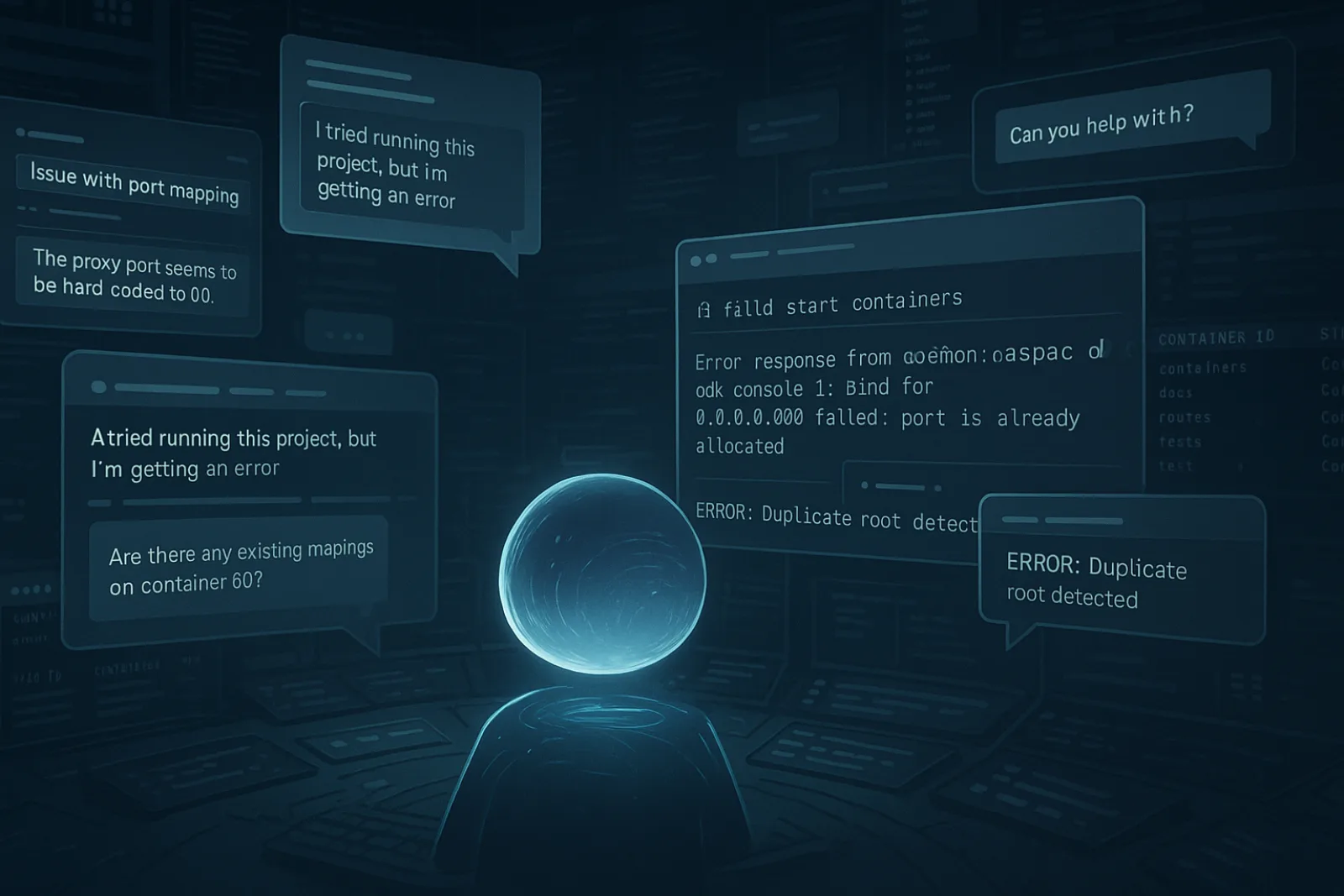
TL;DR for operators Coding assistants look much better when the task is a clean question than when the task is a messy software support conversation. That is the inconvenient point of CodeAssistBench, or CAB, a benchmark that turns resolved GitHub issues into multi-turn, project-grounded conversations where a model must behave like a maintainer, not a code-snippet vending machine.1 ...

July 16, 2025 · 17 min · Zelina