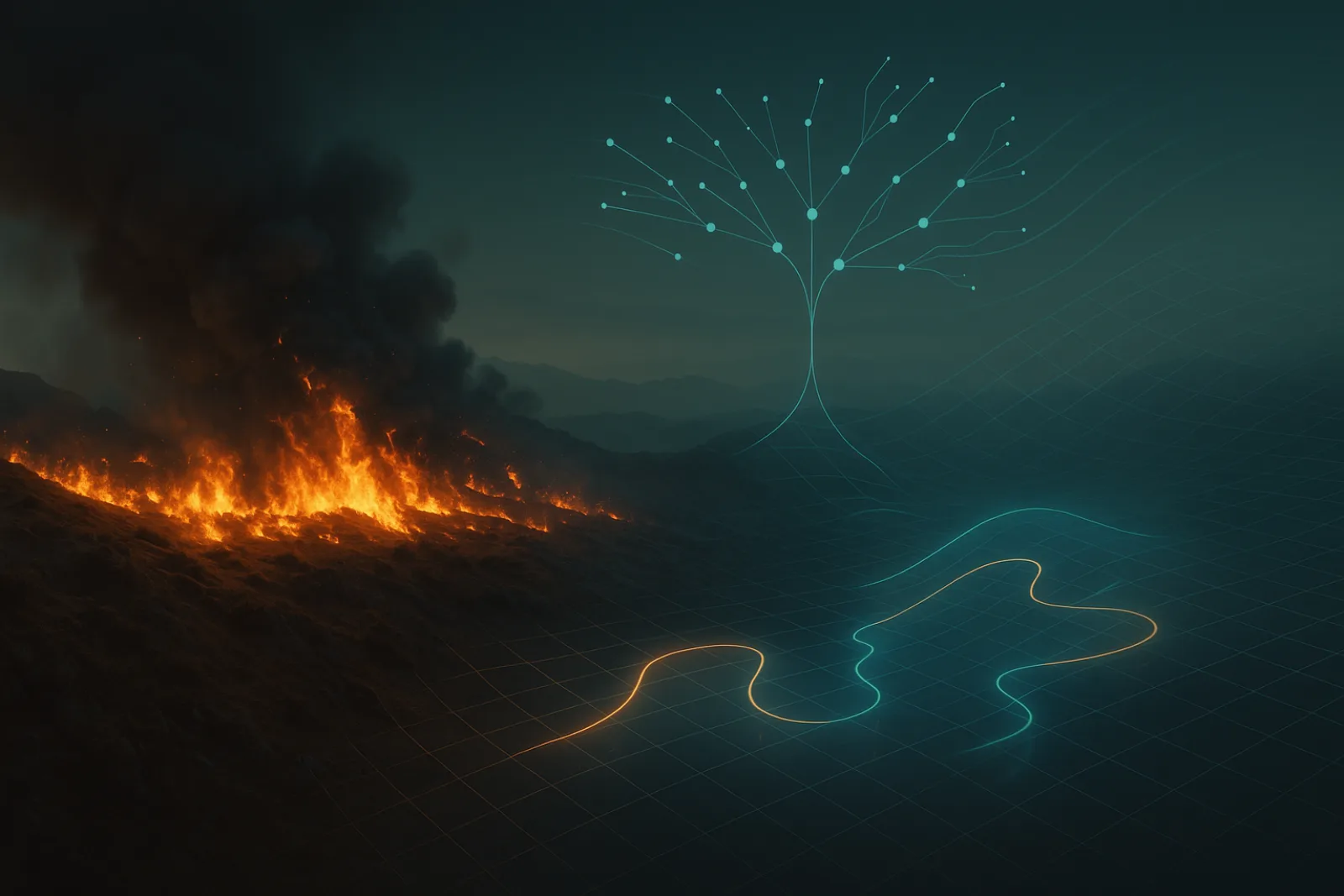
Cover image

Fires, Fakes, and Forecasts: Why GANs Might Outrun Wildfire Physics

Fire is not polite enough to wait for a perfect simulation. That is the operational problem underneath Taehoon Kang and Taeyong Kim’s paper, Probabilistic Wildfire Spread Prediction Using an Autoregressive Conditional Generative Adversarial Network.1 The authors are not trying to replace fire physics with magic. They are trying to answer a narrower, more useful question: can a neural model learn enough from physics-generated wildfire simulations to produce fast, sharp, time-sequenced fire-spread forecasts when response teams do not have the luxury of waiting? ...
November 30, 2025 · 14 min · Zelina
Cover image

Storm-Chasing Agents: How EWE Turns Extreme Weather into Actionable Intelligence

Storms are easy to see after they arrive. The harder question is what actually made them happen. That distinction sounds academic until money enters the room. An insurer wants to know whether an event belongs to a changing regional risk pattern. A grid operator wants to understand whether a heatwave was driven by persistent blocking, moisture transport, or local feedback. A government agency wants a report fast enough to support preparedness, not just a polished explanation three months later. The weather event is visible. The mechanism is expensive. ...

November 28, 2025 · 14 min · Zelina