Cover image

Watch This Space: How Two Simple Heuristics Outsmarted a Whole SAT Solver

A solver can lose time in a very boring place: deciding which internal bookkeeping trick to use. That sounds too small to matter. Business people usually expect optimization performance to come from grand architecture, better mathematical modeling, expensive hardware, or some heroic AI layer sprinkled on top. Researchers know better, though not always loudly enough. Sometimes the expensive part is not the model. It is the tiny repeated decision made millions of times while the solver tries to keep the model logically alive. ...


November 28, 2025 · 14 min · Zelina
Cover image

Tile by Tile: Why LLMs Still Can't Plan Their Way Out of a 3×3 Box

A board game should not embarrass a frontier model. That is the uncomfortable charm of the 8-puzzle. It has no hidden information, no vague user intent, no messy database schema, no ambiguous policy exception, and no client saying “just make it pop.” It is a 3×3 grid with eight tiles and one blank space. Slide adjacent tiles into the blank. Reach the goal state. Done. ...

November 27, 2025 · 15 min · Zelina
Cover image

Diffusion Unchained: How SimDiff Turns Chaos Into Forecasting Clarity

Forecasting teams usually do not wake up asking for “a beautiful predictive distribution.” They ask a more brutal question: what number should we plan around? How much electricity will be needed tomorrow evening? How much traffic will hit this corridor next week? How many units should sit in the warehouse before demand discovers its theatrical side? In the business world, uncertainty is useful only if it eventually helps someone make a decision. A probability cloud that cannot produce a reliable point forecast is not strategy. It is expensive fog. ...

November 25, 2025 · 16 min · Zelina
Cover image

Hierarchy, Not Hype: Why Domain Logic Beats Agent Chaos

Workflow is where agent demos go to die. A user asks for something that sounds simple: “Assess flood damage in this coastal district after the typhoon.” The agent smiles, metaphorically, and begins its little ritual. It searches, summarizes, calls a tool, thinks again, calls another tool, corrects itself, forgets one preprocessing step, invents a plausible shortcut, then produces a confident final answer that looks fine until someone who actually understands geospatial analysis asks an inconvenient question: where did the corrected satellite imagery come from? ...

November 24, 2025 · 17 min · Zelina
Cover image

Tool Up or Tap Out: How Multi-TAG Elevates Math Reasoning with Smarter LLM Workflows

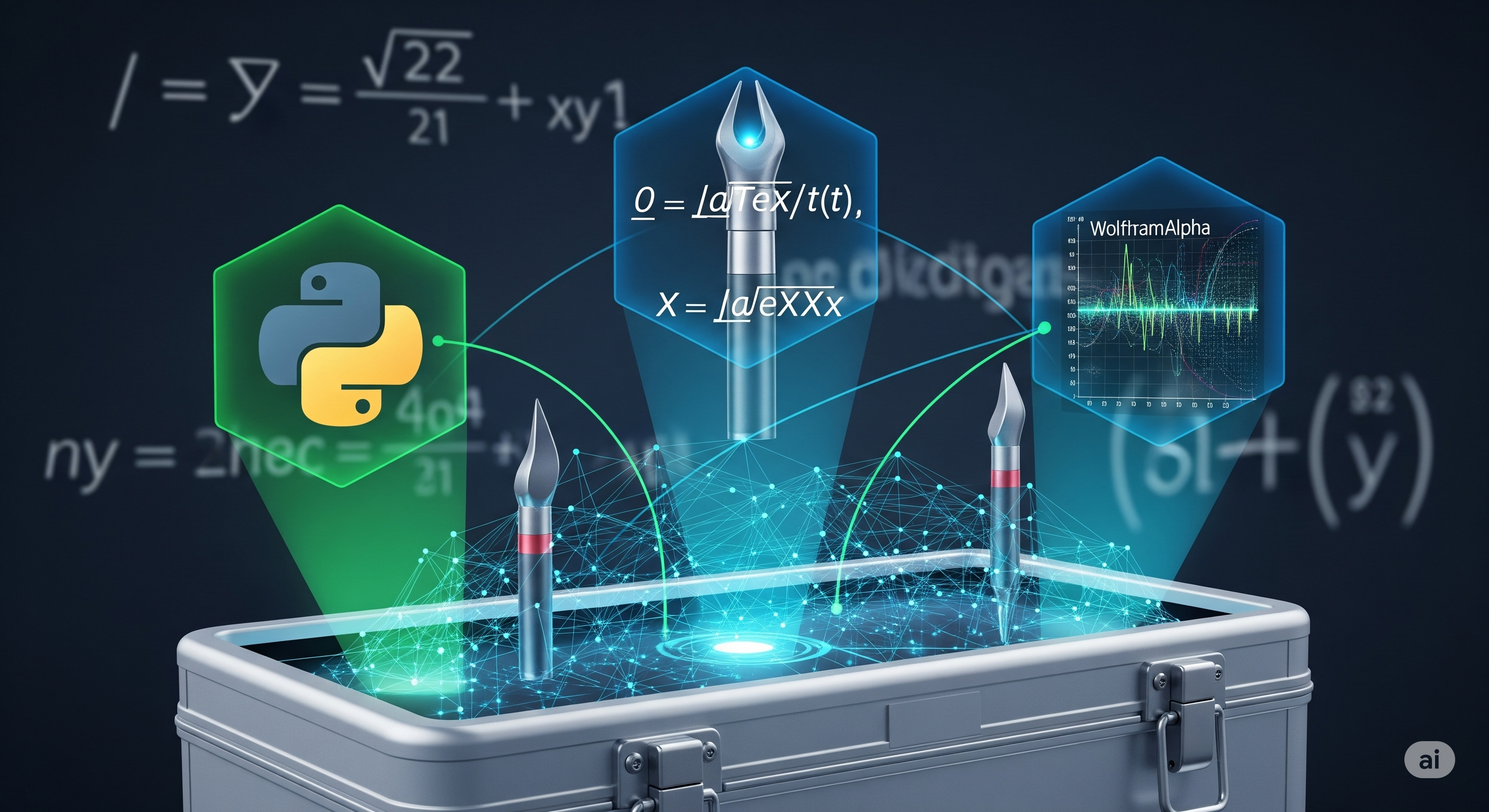
TL;DR for operators Most tool-using LLM workflows still behave like an intern with a favourite spreadsheet: they call one tool, trust the result, and hope the formatting does not catch fire. Multi-TAG proposes a more disciplined pattern. At each reasoning step, the model does not simply choose between chain-of-thought, Python, or WolframAlpha. It asks several tool-backed executors to propose candidate next steps, checks which candidates lead to the same estimated final answer, and then selects the shortest completion among the candidates that agree. That is the useful idea: not “give the model tools,” but “make tools disagree in a controlled way, then use agreement as a verification signal.” ...

July 28, 2025 · 15 min · Zelina
Cover image

Case Closed: How CBR-LLMs Unlock Smarter Business Automation

TL;DR for operators Most enterprise AI projects are still built around a polite fantasy: give the model a prompt, attach a vector database, sprinkle in Chain-of-Thought, and somehow the system will behave like an experienced employee. That works until the agent meets a problem where the correct answer depends less on general knowledge and more on organisational precedent. ...

April 10, 2025 · 22 min · Zelina
Cover image

Beyond the AI Hype: The Real Direction of AI Development

TL;DR for operators Enterprise AI is not becoming valuable because every company can now bolt a chatbot onto its website and call it “transformation.” That is transformation in the same way repainting a warehouse is supply-chain optimisation. The useful direction is narrower and harder: AI systems are becoming business intelligence layers that connect customer signals, workflow execution, financial planning, and strategic decisions. For a cross-border e-commerce company already using tools such as Duoke for customer service, translation, comment-context analysis, order follow-up, data visualisation, and logistics search, the next step is not “more AI features.” It is AI that improves profitability, cash-flow predictability, and market expansion decisions. ...

March 17, 2025 · 17 min · Zelina