Cover image

Mind the Chain: How Blockchain Might Decentralize the AI Age

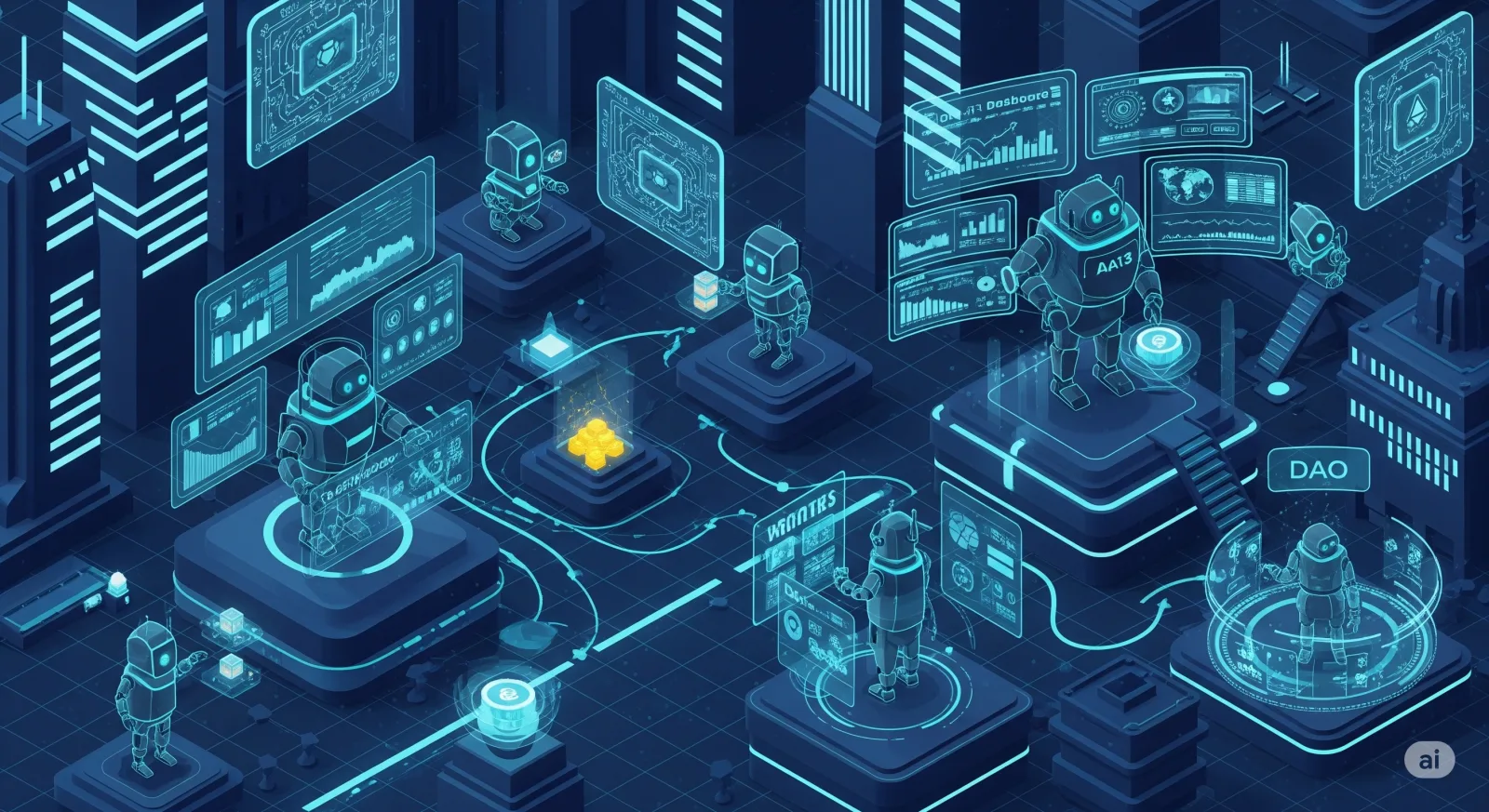
AI has a landlord problem. Not because models are renting office space, although given GPU bills, perhaps they should negotiate. The deeper issue is that modern AI increasingly lives inside a small number of large platforms. The data, the compute, the model weights, the deployment channels, the safety policies, and often the user interface are controlled by the same narrow set of institutions. The result is not merely concentration in a business-school chart. It is concentration in the machinery through which other businesses now write, decide, recommend, price, design, and automate. ...

March 15, 2026 · 16 min · Zelina
Cover image

When the Chain Watches the Brain: Governing Agentic AI Before It Acts

Approval is boring. That is why most automation diagrams hide it. A user request arrives, a sensor emits a signal, an AI agent reasons through the situation, a tool call fires, and something in the real world changes. A stock level is replenished. A traffic light is adjusted. A healthcare alert is escalated. In the clean version of the diagram, the agent looks wonderfully autonomous. In the operational version, someone eventually asks the unpleasant question: who allowed this thing to act? ...

December 28, 2025 · 19 min · Zelina
Cover image

Markets That Learn (and Behave): Inside D2M’s Decentralized Data Marketplace

Data markets usually sound simpler than they are. A buyer wants data. A seller owns data. A platform matches them. Payment moves. Everyone gives a keynote about “unlocking value.” Then the real problems arrive wearing steel-toed boots: the data is private, the seller may be low quality, the buyer wants a model rather than a spreadsheet, the compute layer may be dishonest, and nobody wants to trust a central broker unless absolutely necessary. ...

December 14, 2025 · 17 min · Zelina
Cover image

From Wallets to Warlords: How AI Agents Are Colonizing Web3

TL;DR for operators The useful reading of this paper is not “AI agents are coming to crypto.” That is already obvious, and in some corners of the market, painfully over-branded. The sharper point is that Web3-AI agents are forming a stack. At the bottom are infrastructure and trust layers: protocols, DePIN systems, verification mechanisms, execution environments, and agent-development platforms. On top sit the applications: DeFi agents, portfolio tools, market-intelligence systems, governance assistants, security auditors, creative agents, and RWA managers. The paper’s dataset of 133 projects shows this stack is not evenly valued. Infrastructure accounts for 67.8% of the analysed $6.92 billion market capitalisation, even though incubation platforms show the most project activity.1 ...

August 6, 2025 · 20 min · Zelina
Cover image

Guardians of the Chain: How Smart-LLaMA-DPO Turns Code into Clarity

TL;DR for operators Smart-LLaMA-DPO is not interesting because it puts another LLM badge on smart contract auditing. We have enough badges. It is interesting because it shows a credible mechanism for making an LLM behave more like a useful junior security analyst: read the contract, identify whether the vulnerability is real, locate the issue, and explain the reasoning in a way a developer can act on. ...

June 24, 2025 · 16 min · Zelina
Cover image

From Ballots to Bots: Reprogramming Democracy for the AI Era

TL;DR for operators AI political agents are best understood as a bandwidth upgrade for democratic participation, not as chrome-plated replacements for elected officials. The serious idea is not “let a chatbot run parliament”, which would be a fine way to make bad governance both faster and more confidently worded. The serious idea is that citizens, communities, and institutions may use AI delegates to process policy information, model preferences, negotiate trade-offs, and keep a continuous audit trail of representation. ...

June 10, 2025 · 16 min · Zelina