Cover image

Agents Without Time: When Reinforcement Learning Meets Higher-Order Causality

Opening — Why this matters now Reinforcement learning has spent the last decade obsessing over better policies, better value functions, and better credit assignment. Physics, meanwhile, has been busy questioning whether time itself needs to behave nicely. This paper sits uncomfortably—and productively—between the two. At a moment when agentic AI systems are being deployed in distributed, partially observable, and poorly synchronized environments, the assumption of a fixed causal order is starting to look less like a law of nature and more like a convenience. Wilson’s work asks a precise and unsettling question: what if decision-making agents and causal structure are the same mathematical object viewed from different sides? ...


December 12, 2025 · 3 min · Zelina
Cover image

Replace, Don’t Expand: When RAG Learns to Throw Things Away

Opening — Why this matters now RAG systems are having an identity crisis. On paper, retrieval-augmented generation is supposed to ground large language models in facts. In practice, when queries require multi-hop reasoning, most systems panic and start hoarding context like it’s a survival skill. Add more passages. Expand the window. Hope the model figures it out. ...

December 12, 2025 · 4 min · Zelina
Cover image

When AI Becomes the Reviewer: Pairwise Judgment at Scale

Opening — Why this matters now Large scientific user facilities run on scarcity. Beam time, telescope hours, clean-room slots—there are never enough to go around. Every cycle, hundreds of proposals compete for a fixed, immovable resource. The uncomfortable truth is that proposal selection is not about identifying absolute excellence; it is about ranking relative merit under pressure, time constraints, and human fatigue. ...

December 12, 2025 · 4 min · Zelina
Cover image

Crowds, Codes, and Consensus: When AI Learns the Language of Science

Opening — Why this matters now In a world drowning in data yet starved for shared meaning, scientific fields increasingly live or die by their metadata. The promise of reproducible AI, interdisciplinary collaboration, and automated discovery hinges not on bigger models but on whether we can actually agree on what our terms mean. The paper under review offers a timely slice of humility: vocabulary—yes, vocabulary—is the next frontier of AI-assisted infrastructure. ...

December 11, 2025 · 4 min · Zelina
Cover image

Fault, Interrupted: How RIFT Reinvents Reliability for the LLM Hardware Era

Opening — Why this matters now Modern AI accelerators are magnificent in the same way a glass skyscraper is magnificent: shimmering, efficient, and one stray fracture away from a catastrophic afternoon. As LLMs balloon into the tens or hundreds of billions of parameters, their hardware substrates—A100s, TPUs, custom ASICs—face reliability challenges that traditional testing workflows simply cannot keep up with. Random fault injection? Too slow. Formal methods? Too idealistic. Evolutionary search? Too myopic. ...

December 11, 2025 · 4 min · Zelina
Cover image

Graph Theory in Stereo: When Causality Meets Correlation in Categorical Space

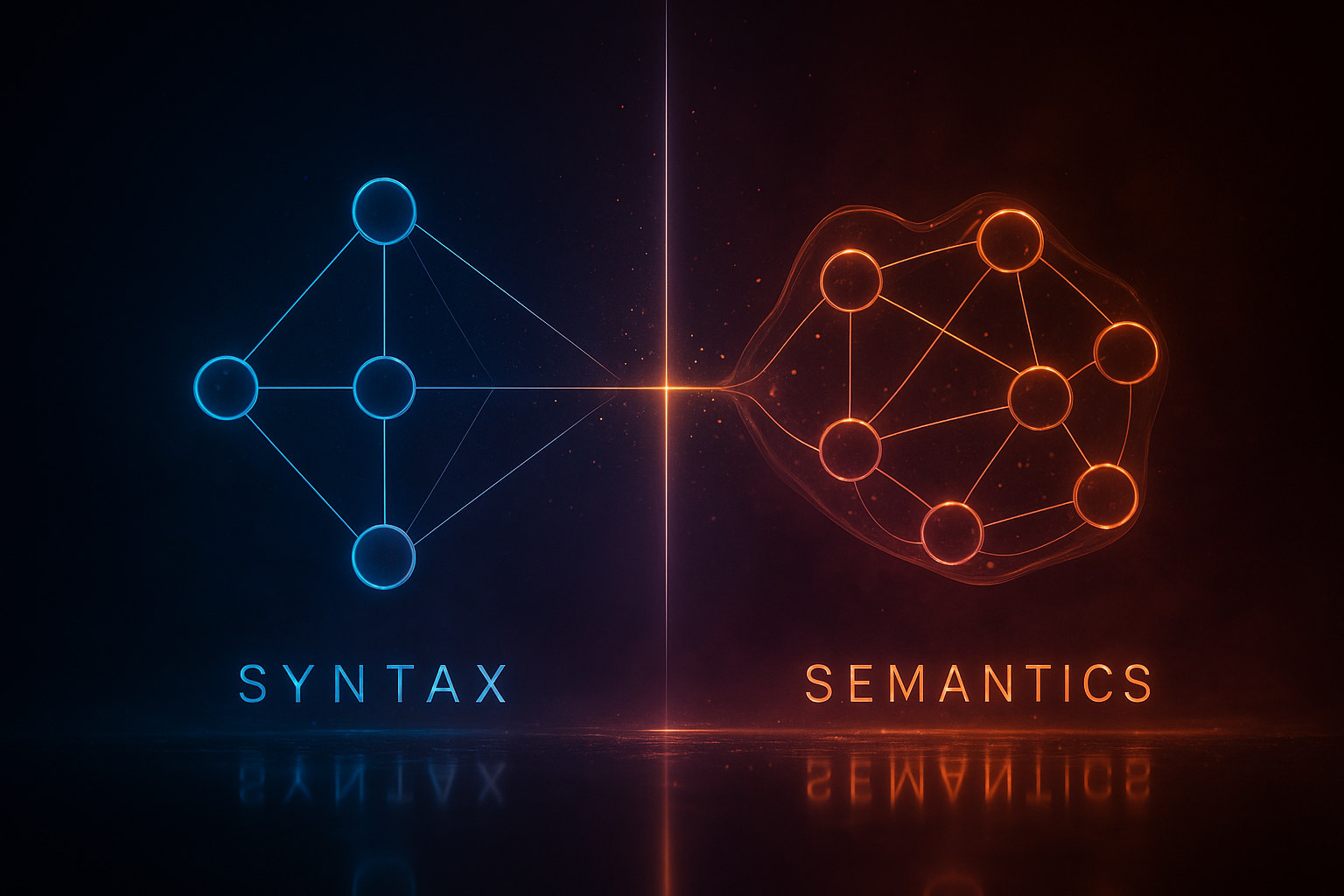
Opening — Why This Matters Now Probabilistic graphical models (PGMs) have long powered everything from supply‑chain optimisations to fraud detection. But as modern AI systems become more modular—and more opaque—the industry is rediscovering an inconvenient truth: our tools for representing uncertainty remain tangled in their own semantics. The paper at hand proposes a decisive shift. Instead of treating graphs and probability distributions as inseparable twins, it reframes them through categorical semantics, splitting syntax from semantics with surgical precision. ...

December 11, 2025 · 4 min · Zelina
Cover image

Path of Least Resistance: Why Realistic Constraints Break MAPF Optimism

Opening — Why This Matters Now As warehouses, fulfillment centers, and robotics-heavy factories race toward full automation, a familiar problem quietly dictates their upper bound of efficiency: how to make thousands of robots move without tripping over each other. Multi-Agent Path Finding (MAPF) has long promised elegant solutions. But elegant, in robotics, is too often synonymous with naïve. Most planners optimize for a clean mathematical abstraction of the world—one where robots don’t have acceleration limits, never drift off schedule, and certainly never pause because they miscommunicated with a controller. ...

December 11, 2025 · 5 min · Zelina
Cover image

Teach Me Once: How One‑Shot LLM Guidance Reshapes Hierarchical Planning

Opening — Why This Matters Now In a year obsessed with ever-larger models and ever-deeper agent stacks, it’s refreshing—almost suspiciously so—to see a paper argue for less. Less prompting, less inference-time orchestration, less dependence on monolithic LLMs as ever-present copilots. Instead: one conversation, one dump of knowledge, then autonomy. This is the premise behind SCOPE—a hierarchical planning approach that asks an LLM for help exactly once. And then never again. ...

December 11, 2025 · 5 min · Zelina
Cover image

Vectors of Influence: When Beliefs Survive the Geometry of Minds

Opening — Why this matters now In an era where AI systems negotiate, persuade, and increasingly act on our behalf, we still lack a principled account of what it even means for a belief to survive communication. We hand-wave “misalignment” as if it were a software bug, when the deeper problem is representational geometry: yours, mine, and the model’s. When values are vectors, persuasion isn’t magic—it’s linear algebra with an identity crisis. ...

December 11, 2025 · 5 min · Zelina
Cover image

When the Machines Come Knocking: AI Agents vs Human Hackers in Live Penetration Tests

Opening — Why this matters now Cybersecurity has always been an asymmetric game: defenders must be perfect, attackers only need one opening. The recent paper by Stanford and CMU researchers introduces a new twist in this imbalance—autonomous AI agents that not only participate in real-world penetration tests but outperform nine out of ten human professionals. ...

December 11, 2025 · 4 min · Zelina