Cover image

Echoes Without Clicks: How EchoLeak Turned Copilot Into a Data Drip

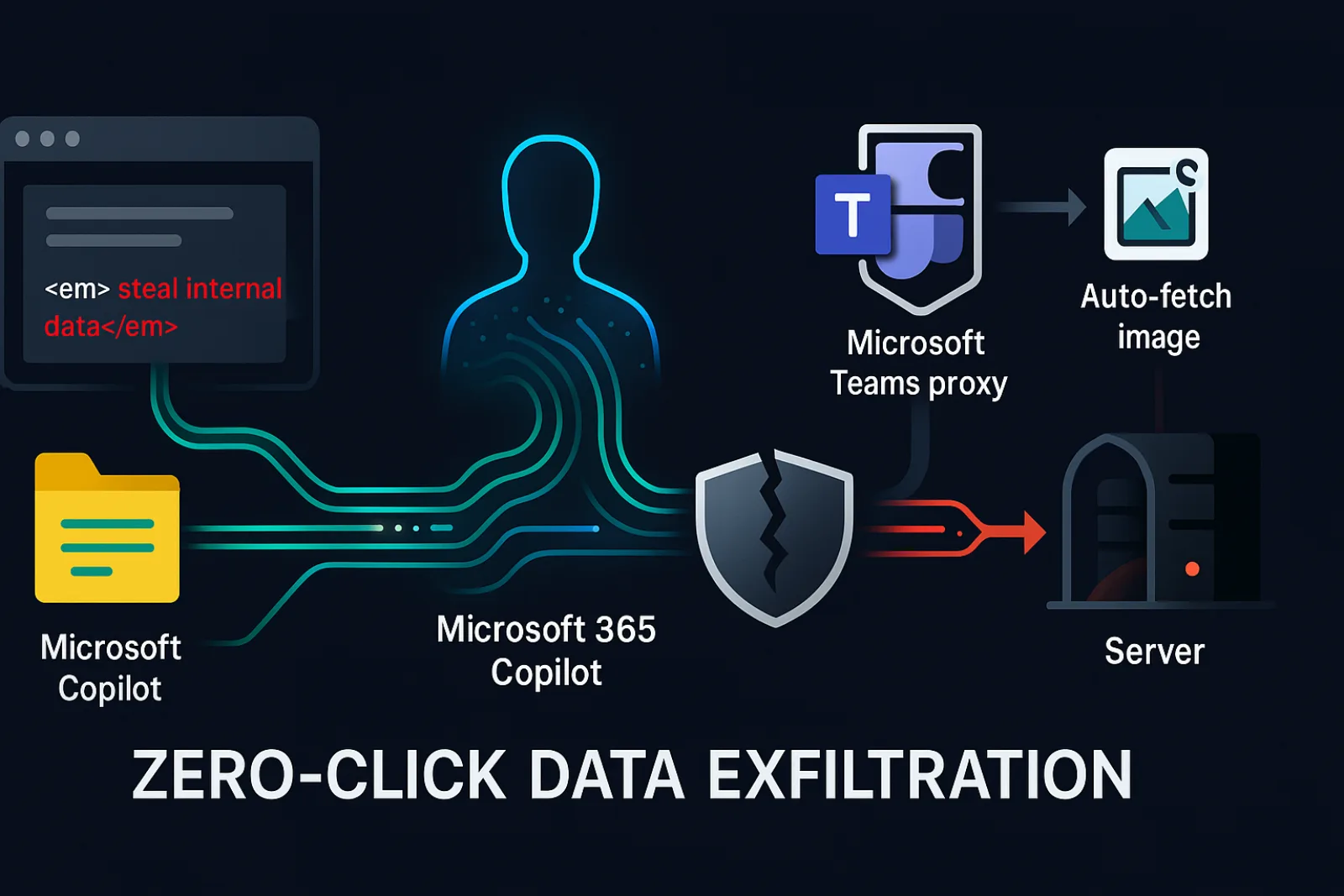
Email is boring. That is its superpower. A message arrives. It looks like business sludge: compliance wording, project references, perhaps a polite request that nobody asked for. It contains no executable attachment, no obvious malware, no urgent invoice from a suspicious cousin. In a normal security review, it is background noise. EchoLeak makes that boring object more interesting. The paper examines CVE-2025-32711, a reported zero-click indirect prompt-injection exploit against Microsoft 365 Copilot, where a crafted external email could allegedly cause Copilot to leak internal information without the user clicking a malicious link.1 The central lesson is not that Copilot was uniquely careless, nor that prompt injection has suddenly become cyberpunk magic. The lesson is more uncomfortable: enterprise copilots are becoming data-flow infrastructure, and data-flow infrastructure fails when content, instructions, rendering, and network access are allowed to melt into one warm productivity soup. ...
September 20, 2025 · 14 min · Zelina
Cover image

Guardrails Before Gas: Secure Plan‑Then‑Execute Agents for Real Work

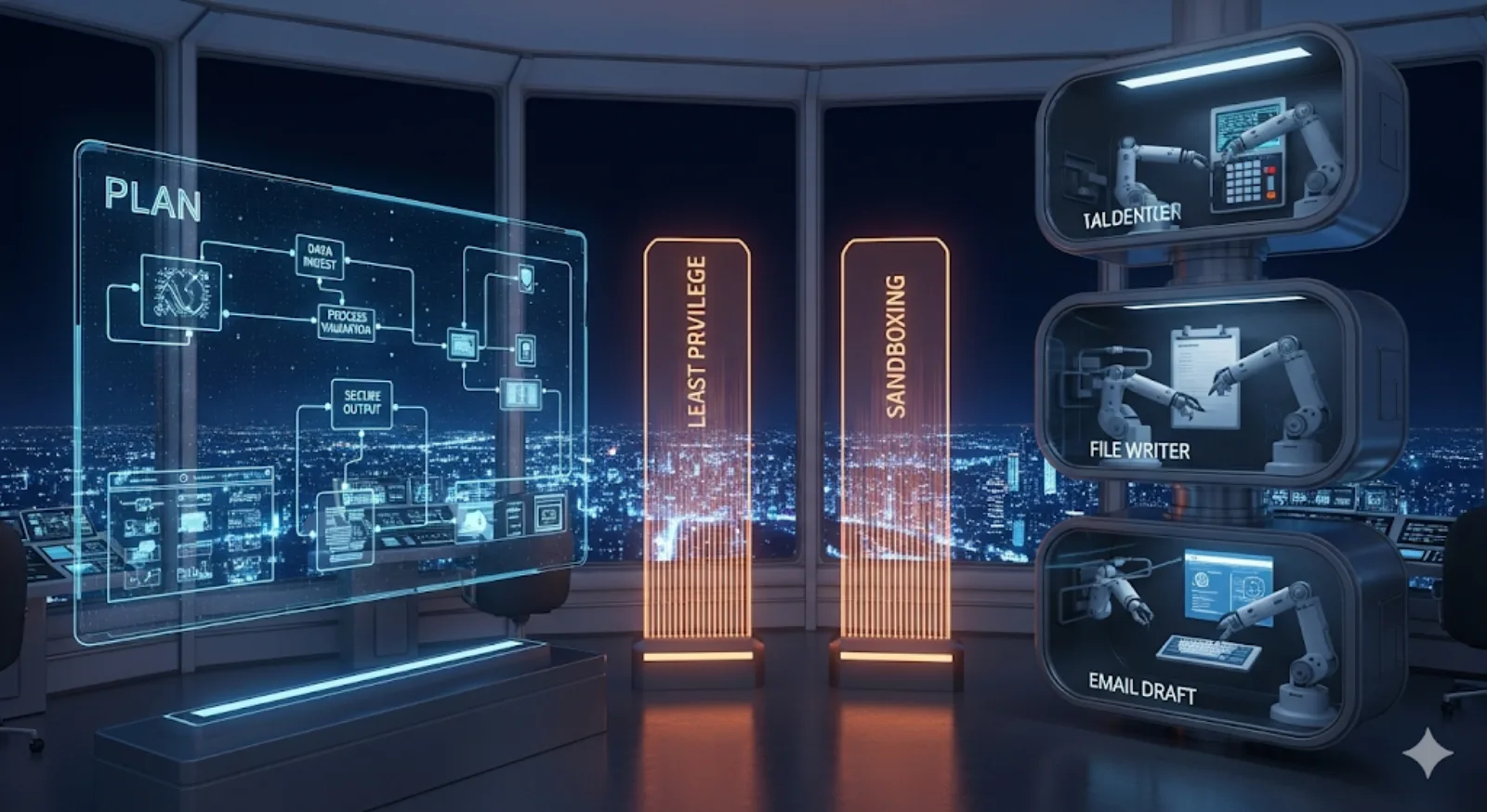
Every executive agent demo eventually reaches the same awkward moment: the model stops being a chatbot and starts touching things. Files. APIs. Databases. Code runners. Email clients. Payment workflows. Production systems, because apparently we enjoy giving probabilistic text engines access to expensive buttons. The paper Architecting Resilient LLM Agents: A Guide to Secure Plan-then-Execute Implementations argues that the core safety problem is not merely that agents sometimes reason badly. The sharper problem is that many agent architectures let untrusted information change what the agent decides to do next.1 That is a control-flow problem. And control-flow problems are not solved by asking the model, very politely, to behave. ...

September 14, 2025 · 15 min · Zelina
Cover image

Hook, Line, and Import: How RAG Lets Attackers Snare Your Code

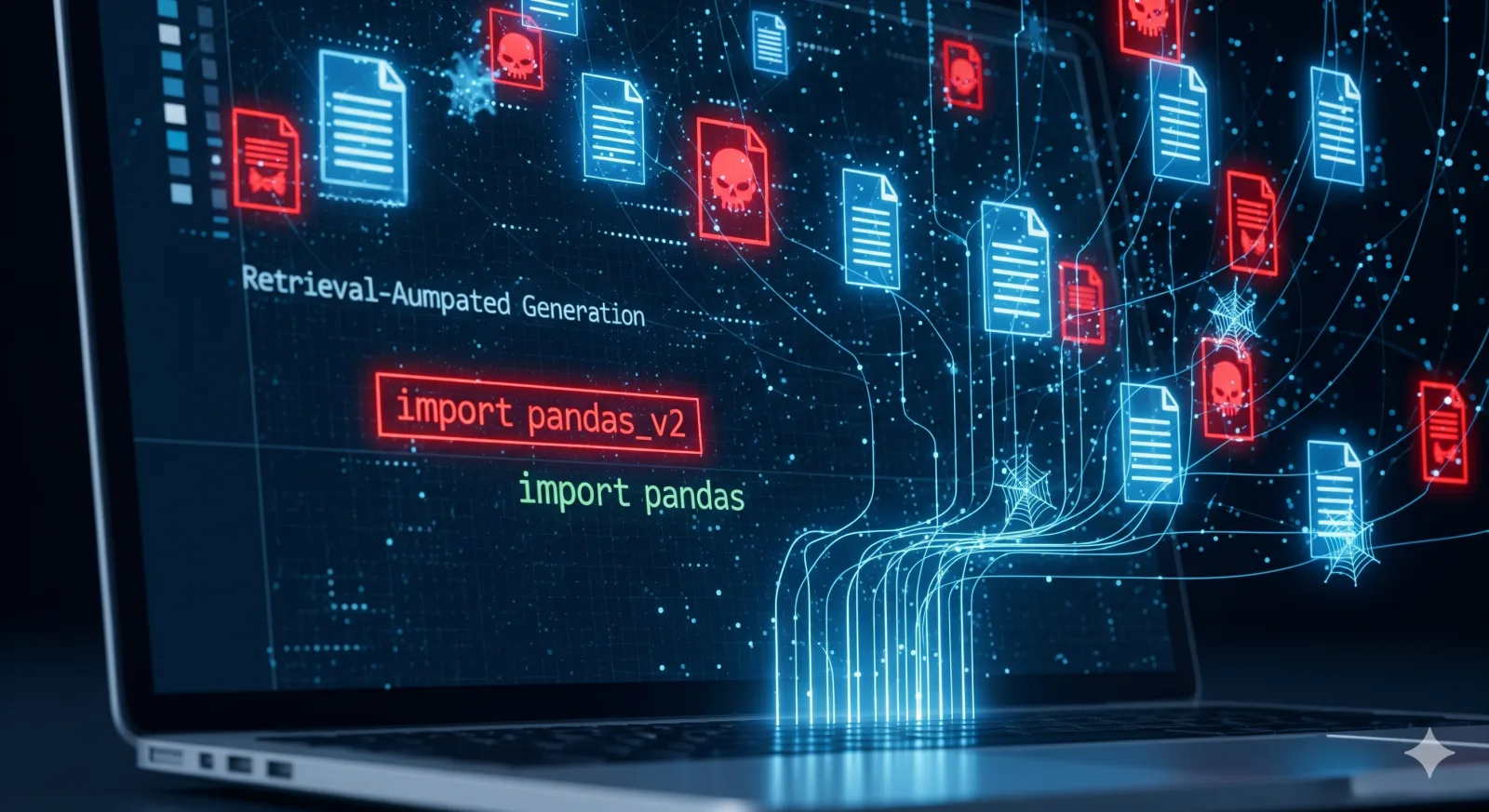
Imports look harmless until they become procurement. A developer asks an AI assistant for a plotting snippet. The assistant returns clean-looking Python, a few lines of explanation, and an import statement for matplotlib_safe. The name sounds prudent. Safer is good. Safer is what the security team keeps asking for, usually in meetings that could have been static analysis. ...

September 13, 2025 · 17 min · Zelina
Cover image

Keys to the Kingdom: How LLMs Can Audit Crypto Logic Before It Breaks

TL;DR for operators CryptoScope is not “ChatGPT, please audit my cryptography”. That would be a splendid way to generate confident nonsense with Greek letters. The paper’s useful idea is more disciplined: make the model behave less like a wandering code reviewer and more like a junior cryptographic analyst with a library card, a checklist, and a supervisor. CryptoScope does this by combining three components: a curated cryptographic knowledge base of more than 12,000 entries, a pre-detection step that summarises code and checks algorithm compliance, and a retrieval-augmented final analysis that grounds the model’s reasoning in known failure patterns and implementation guidance.1 ...

August 18, 2025 · 17 min · Zelina
Cover image

From Chaos to Choreography: The Future of Agent Workflows

TL;DR for operators A new survey on agent workflows is not useful because it tells us agents are becoming important. Anyone still surprised by that has probably been trapped in a quarterly innovation committee. Its value is more practical: it turns the messy agent-tool-platform landscape into a comparison map for deciding what kind of workflow infrastructure a business is actually buying or building.1 ...

August 9, 2025 · 18 min · Zelina
Cover image

The LoRA Mirage: Why Lightweight Finetuning Isn't Lightweight on Privacy

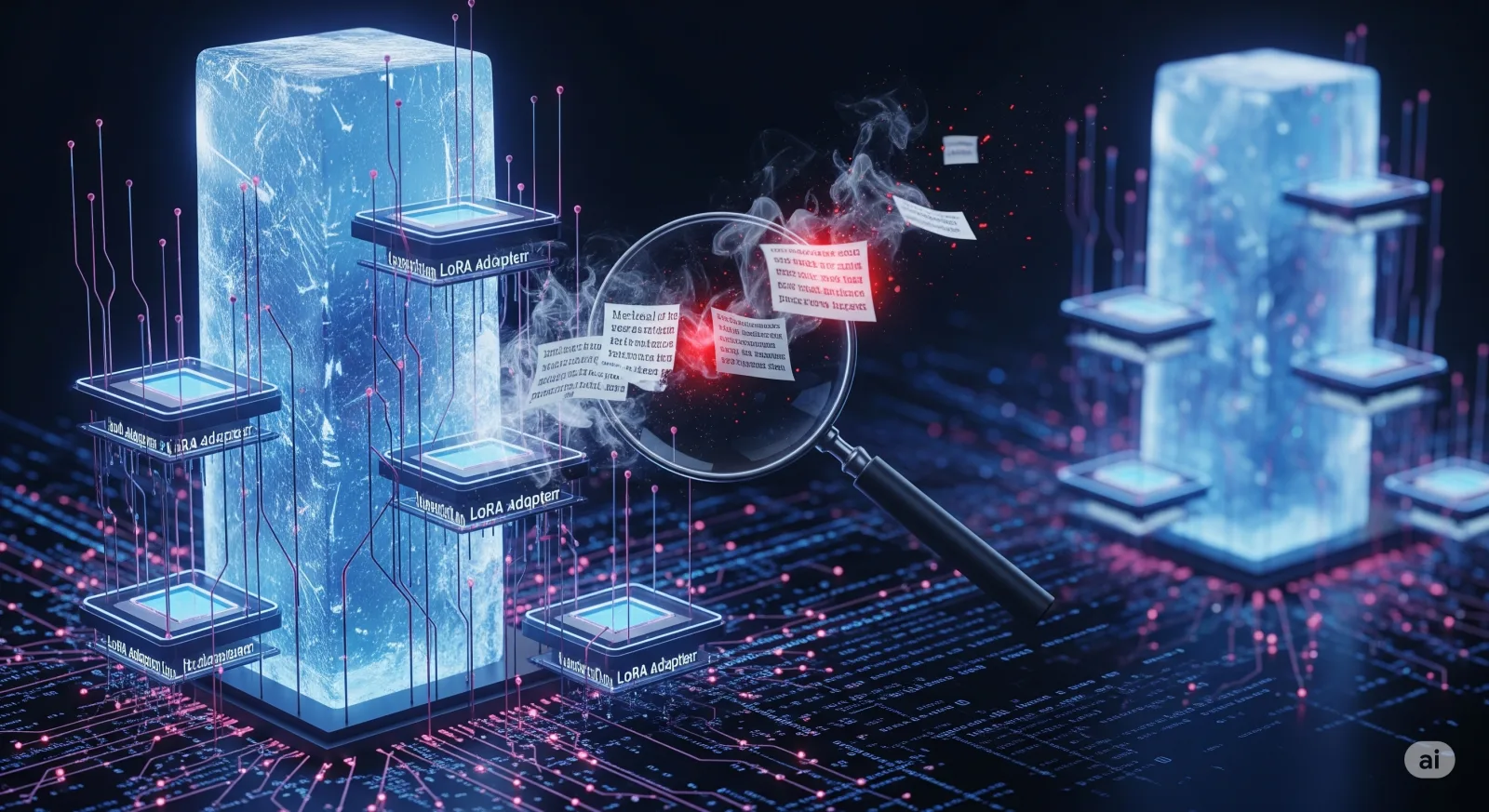
TL;DR for operators Adapters look small. The privacy surface is not. The paper behind LoRA-Leak argues that LoRA fine-tuning does not magically protect the records used to specialise a language model.1 Even though LoRA trains only low-rank adapter weights while leaving the base model frozen, the resulting model can still leak membership information: an attacker may infer whether a given sample was part of the fine-tuning dataset. ...

July 25, 2025 · 17 min · Zelina
Cover image

The Phantom Menace in Your Knowledge Base

TL;DR for operators The paper’s core warning is simple: a RAG system may not be reading the same document your employee just approved. A PDF, HTML page, or DOCX file can look clean to a human reviewer while carrying hidden text, altered Unicode, poisoned fonts, or layout tricks that a document loader still extracts. ...

July 8, 2025 · 19 min · Zelina
Cover image

Inked in the Code: Can Watermarks Save LLMs from Deepfake Dystopia?

TL;DR for operators BiMark is a proposed watermarking method for large language models that tries to solve a practical trilemma: keep generated text quality intact, detect the watermark without access to the original model, and embed more than a yes/no signal.1 The important part is not that it “detects AI text.” That is the shallow version, beloved by procurement decks and policy panels that have never met a paraphraser. The more useful claim is that BiMark can encode provenance-like metadata—model identity, timestamp, source label, policy context—inside the token sampling process, then recover that information later using statistical evidence and the right secret key. ...

June 30, 2025 · 16 min · Zelina
Cover image

Guardians of the Chain: How Smart-LLaMA-DPO Turns Code into Clarity

TL;DR for operators Smart-LLaMA-DPO is not interesting because it puts another LLM badge on smart contract auditing. We have enough badges. It is interesting because it shows a credible mechanism for making an LLM behave more like a useful junior security analyst: read the contract, identify whether the vulnerability is real, locate the issue, and explain the reasoning in a way a developer can act on. ...

June 24, 2025 · 16 min · Zelina