Cover image

Approval Isn’t Free: When AI Safety Trades Capability for Control

Approval sounds cheap. In business systems, it is the familiar answer to almost every automation anxiety. Let the model propose, let an overseer approve, let the workflow continue. A trading agent recommends a position; a risk layer approves it. A customer-support agent drafts a refund decision; a policy checker approves it. A recommendation system optimizes engagement; a governance model approves the output. There. Safety added. Please admire the compliance architecture. ...


April 1, 2026 · 14 min · Zelina
Cover image

Friction Over Fiction: Why AI Agents Need to Feel Resistance

Tools are not free. That sentence sounds too obvious to deserve an article, which is usually a warning that the industry has built several architectures pretending it is false. A tool-using AI agent can call a search API, query a database, inspect a document, ask another model, trigger a diagnostic pipeline, or run a workflow step. In a clean demo, each call feels like another harmless unit of intelligence. The agent thinks, acts, observes, thinks again, and the audience applauds because the trace looks busy. Busy is often mistaken for capable. Enterprise software has enjoyed this little confusion for decades. ...

April 1, 2026 · 17 min · Zelina
Cover image

Protocol Over Prompts: When Structure Becomes Strategy in AI Communication

Prompts are now office furniture. Everyone has them. Everyone complains about them. Nobody is quite sure who owns the standard version. One team keeps a Notion page of “best prompts.” Another hides theirs in a spreadsheet. A third tells new staff to “just ask clearly,” which is not a method, but it does have the administrative elegance of doing nothing. ...

April 1, 2026 · 16 min · Zelina
Cover image

The Price of Explanation: When AI Should Stay Silent

Explanation is not free. That sounds obvious until one watches an AI system in production. A model predicts. A user asks why. The platform dutifully runs SHAP, LIME, saliency maps, or some carefully branded interpretability module, then presents a ranked list of “important” features with the solemn confidence of a consultant who has just discovered a bar chart. ...

April 1, 2026 · 21 min · Zelina
Cover image

Entropy Over Relevance: Why Your RAG System Is Asking the Wrong Questions

Evidence is not context. That is the small, expensive misunderstanding behind many enterprise RAG systems. A user asks a question, the system retrieves semantically similar chunks, the model reads them, and the answer arrives with a tone that suggests the matter has been settled. Very reassuring. Sometimes even correct. But in the situations where RAG is supposed to be most useful — compliance reviews, financial analysis, legal memos, medical evidence summaries, internal strategy briefings — the problem is often not that the system has too little relevant material. The problem is that the relevant material disagrees, overlaps, dates badly, or supports several competing interpretations at once. ...

March 31, 2026 · 18 min · Zelina
Cover image

The Silent Reasoner: When AI Thinks Without Telling You

Audit logs are comforting because they look administrative. A system acts, a trace appears, a reviewer nods, and everyone pretends the record explains the decision. That habit becomes more fragile when the system is an AI model. In many current AI workflows, especially those involving reasoning models or autonomous agents, the chain-of-thought is treated as the closest available thing to an internal audit trail. The model writes down intermediate reasoning, a monitor reads that reasoning, and the organization hopes the dangerous part—deception, hidden goals, sandbagging, sabotage, or simply the decisive cue behind an answer—will be visible before the final action causes trouble. ...

March 31, 2026 · 17 min · Zelina
Cover image

When AI Starts Writing Papers: The Rise of the Medical AI Scientist

Papers used to have a useful quality: they were difficult to produce. Not always good, unfortunately, but difficult. Someone had to identify a problem, read the literature, design the method, write the code, run the experiment, repair the code, compare the result, draw the figures, write the manuscript, and then survive peer review with only minor emotional damage. ...

March 31, 2026 · 16 min · Zelina
Cover image

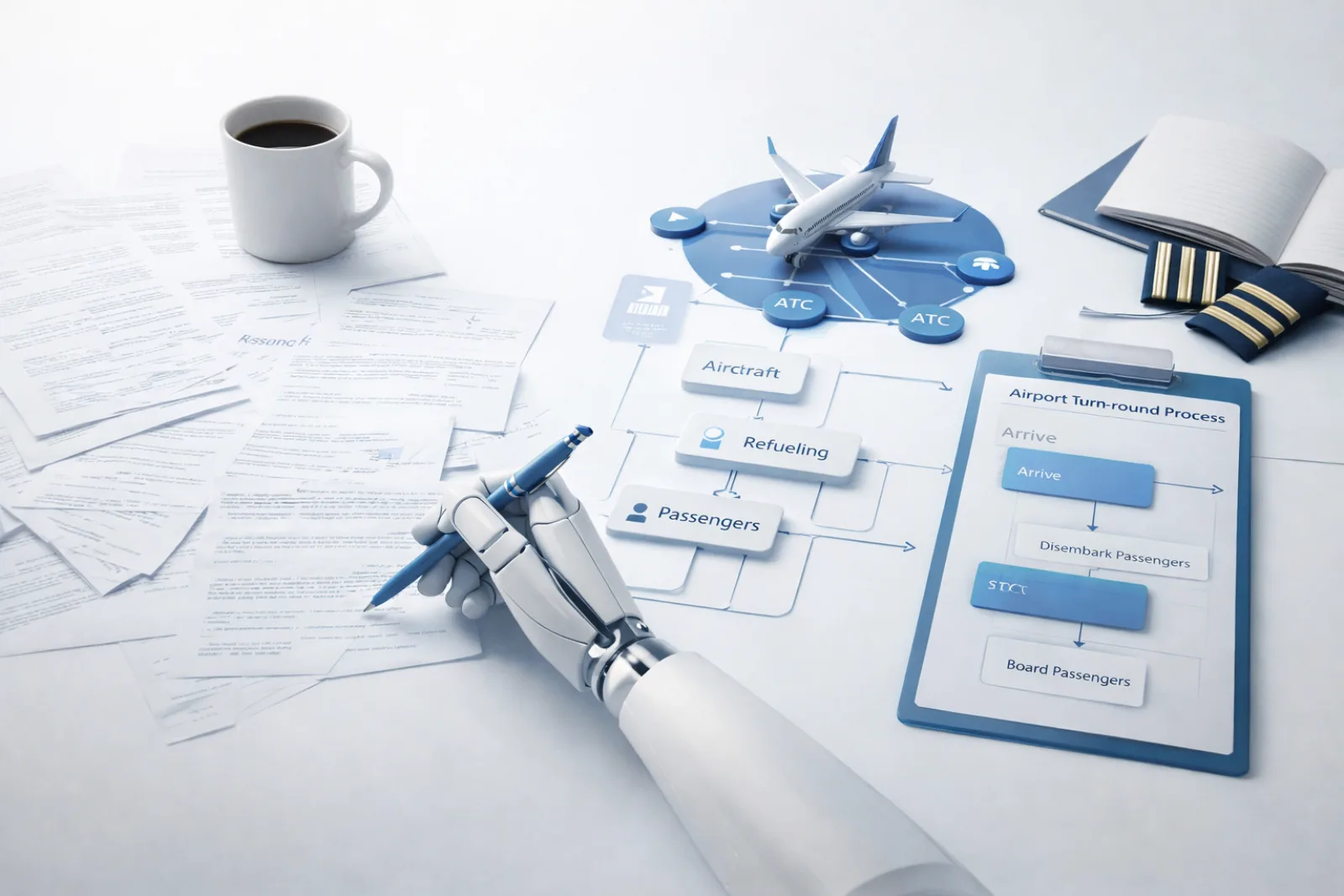
From Black-Box to Boarding Gate: When LLMs Finally Learn to Show Their Work

Airports are where ordinary corporate coordination problems go to become expensive. A delayed data update is not just an “alignment issue.” A vague handoff is not just “cross-functional friction.” A misunderstood phrase can move aircraft, ground crews, gates, passengers, baggage, and regulatory responsibility in the wrong order. Aviation has a talent for making management consultants’ favorite words suddenly physical. Very inconsiderate of it. ...

March 30, 2026 · 15 min · Zelina
Cover image

Safety First, or Task First? The Hidden Trade-off in Agentic AI

Click. That is where the safety problem begins. Not in the eloquent paragraph an AI model writes. Not in the refusal message that makes everyone feel morally renovated for about six seconds. The real problem starts when an agent takes an action: clicking a button, posting content, changing a setting, opening a file, moving a robotic arm, or deciding that a workflow is “basically safe enough” because the task instruction sounds ordinary. ...

March 30, 2026 · 16 min · Zelina
Cover image

The Parallel Mind: How AIRA2 Turns AI Research from Guesswork into Scalable Discovery

Research has a waiting-room problem. A human team proposes an experiment, waits for the training run, checks the metric, argues about whether the result is real, then decides what to try next. The cycle is familiar, expensive, and mildly theatrical. AI research agents promise to compress that loop. Give the agent a benchmark, a compute budget, and a tool environment; let it search; harvest better models at the end. Convenient. Also, if done naively, a beautiful machine for producing confident nonsense at GPU speed. ...

March 30, 2026 · 18 min · Zelina