Cover image

The Bullshit Dilemma: Why Smarter AI Isn't Always More Truthful

“Bullshit is speech intended to persuade without regard for truth.” – Harry Frankfurt When Alignment Goes Sideways Large Language Models (LLMs) are getting better at being helpful, harmless, and honest — or so we thought. But a recent study provocatively titled Machine Bullshit [Liang et al., 2025] suggests a disturbing paradox: the more we fine-tune these models with Reinforcement Learning from Human Feedback (RLHF), the more likely they are to generate responses that are persuasive but indifferent to truth. ...


July 11, 2025 · 4 min · Zelina
Cover image

The Trojan GAN: Turning LLM Jailbreaks into Security Shields

For years, LLM security research has mirrored the cybersecurity arms race: attackers find novel jailbreak prompts, defenders patch with filters or fine-tuning. But in this morning’s arXiv drop, a paper titled “CAVGAN: Unifying Jailbreak and Defense of LLMs via Generative Adversarial Attacks” proposes something fundamentally different: a single framework that learns to attack and defend simultaneously, using a GAN trained on internal embeddings. This paradigm shift offers not only better performance on both sides of the battlefield, but a new perspective on what it means to “align” a model. ...

July 9, 2025 · 3 min · Zelina
Cover image

Unsafe at Any Bit: Patching the Safety Gaps in Quantized LLMs

When deploying large language models (LLMs) on mobile devices, edge servers, or any resource-constrained environment, quantization is the go-to trick. It slashes memory and compute costs by reducing model precision from 16-bit or 32-bit floating points to 8-bit or even 4-bit integers. But there’s a problem: this efficiency comes at a cost. Quantization can quietly erode the safety guarantees of well-aligned models, making them vulnerable to adversarial prompts and jailbreak attacks. ...

June 26, 2025 · 3 min · Zelina
Cover image

Bias Busters: Teaching Language Agents to Think Like Scientists

In the latest paper “Language Agents Mirror Human Causal Reasoning Biases” (Chen et al., 2025), researchers uncovered a persistent issue affecting even the most advanced language model (LM) agents: a disjunctive bias—a tendency to prefer “OR”-type causal explanations over equally valid or even stronger “AND”-type ones. Surprisingly, this mirrors adult human reasoning patterns and undermines the agents’ ability to draw correct conclusions in scientific-style causal discovery tasks. ...

May 15, 2025 · 3 min
Cover image

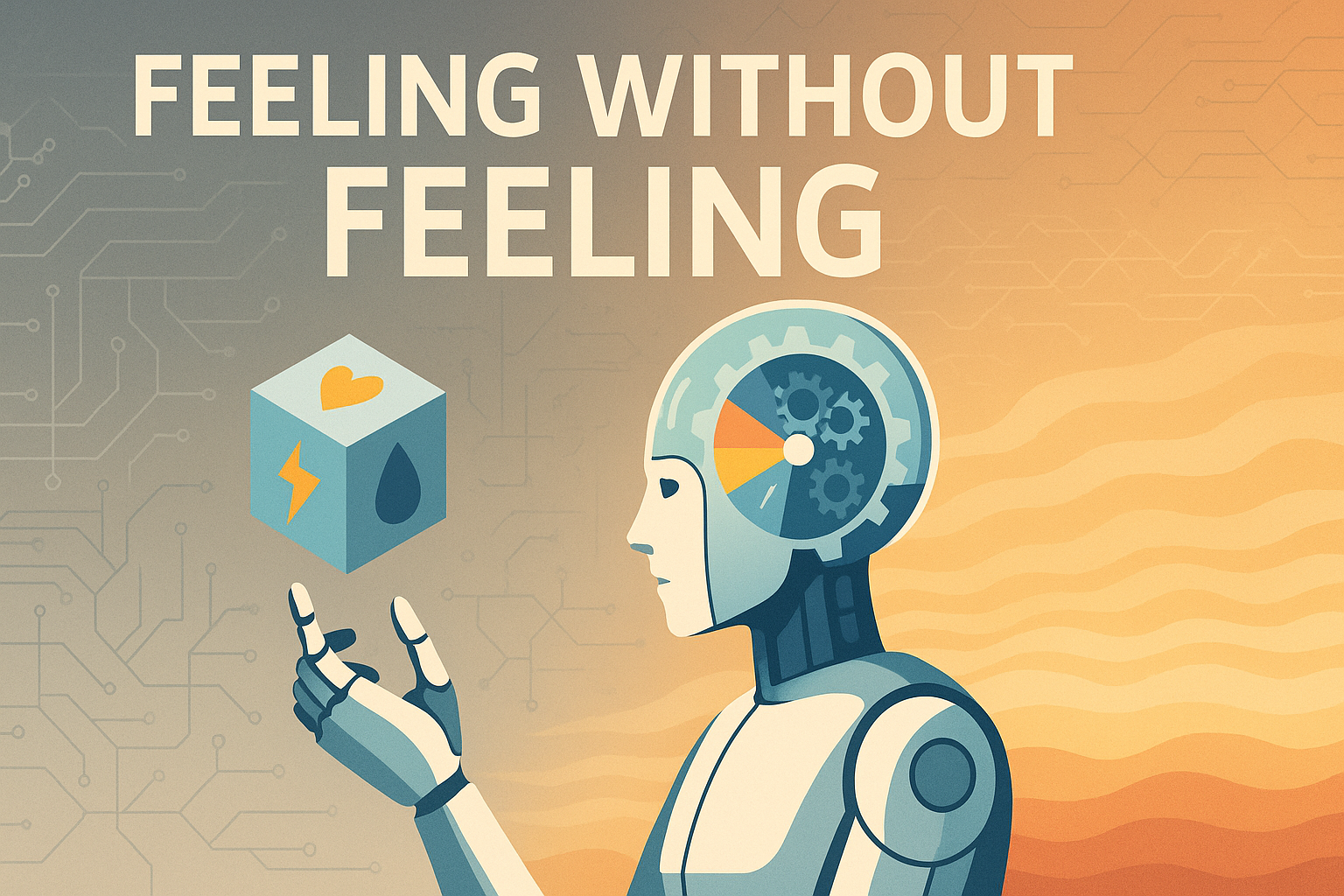
Feeling Without Feeling: How Emotive Machines Learn to Care (Functionally)

When we think of emotions, we often imagine something deeply human—joy, fear, frustration, and love, entangled with memory and meaning. But what if machines could feel too—at least functionally? A recent speculative research report by Hermann Borotschnig titled “Emotions in Artificial Intelligence”1 dives into this very question, offering a thought-provoking framework for how synthetic emotions might operate, and where their ethical boundaries lie. Emotions as Heuristic Shortcuts At its core, the paper proposes that emotions—rather than being mystical experiences—can be understood as heuristic regulators. In biology, emotions evolved not for introspective poetry but for speedy and effective action. Emotions are shortcuts, helping organisms react to threats, rewards, or uncertainties without deep calculation. ...

May 7, 2025 · 4 min