Cover image

When the Sandbox Thinks Back: Training AI Agents in Simulated Realities

Opening — Why this matters now The AI industry has a curious paradox: we can train models to reason at Olympiad level, but they still fumble at booking flights or handling a spreadsheet. The problem isn’t intelligence—it’s context. Agents are trained in narrow sandboxes that don’t scale, breaking the moment the environment changes. Microsoft and the University of Washington’s Simia framework tackles this bottleneck with a provocative idea: what if the agent could simulate its own world? ...

November 6, 2025 · 4 min · Zelina
Cover image

The Agent Olympics: How Toolathlon Tests the Limits of AI Workflows

Opening — Why this matters now The AI world is obsessed with benchmarks. From math reasoning to coding, each new test claims to measure progress. Yet, none truly capture what businesses need from an agent — a system that doesn’t just talk, but actually gets things done. Enter Toolathlon, the new “decathlon” for AI agents, designed to expose the difference between clever text generation and real operational competence. In a world where large language models (LLMs) are being marketed as digital employees, Toolathlon arrives as the first test that treats them like one. Can your AI check emails, update a Notion board, grade homework, and send follow-up messages — all without breaking the workflow? Spoiler: almost none can. ...

November 4, 2025 · 4 min · Zelina
Cover image

From Prototype to Profit: How IBM's CUGA Redefines Enterprise Agents

When AI agents first emerged as academic curiosities, they promised a future of autonomous systems capable of navigating apps, websites, and APIs as deftly as humans. Yet most of these experiments never left the lab. The jump from benchmark to boardroom—the point where AI must meet service-level agreements, governance rules, and cost-performance constraints—remained elusive. IBM’s recent paper, From Benchmarks to Business Impact, finally brings data to that missing bridge. The Benchmark Trap Generalist agents such as AutoGen, LangGraph, and Operator have dazzled the research community with their ability to orchestrate tasks across multiple tools. But academic triumphs often hide operational fragility. Benchmarks like AppWorld or WebArena measure intelligence; enterprises measure ROI. They need systems that are reproducible, auditable, and policy-compliant—not just clever. ...

November 2, 2025 · 4 min · Zelina
Cover image

The Esperanto of AI Agents: How the Agent Data Protocol Unifies a Fragmented Ecosystem

The Problem of Fragmented Agent Intelligence Building large language model (LLM) agents has long been haunted by a quiet paradox. Despite a growing number of agent datasets—from web navigation to software engineering—researchers rarely fine-tune their models across these diverse sources. The reason is not a shortage of data, but a lack of coherence: every dataset speaks its own dialect. One uses HTML trees; another records API calls; a third logs terminal sessions. Converting them all for fine-tuning an agent is a nightmare of custom scripts, mismatched schemas, and endless validation. ...

November 2, 2025 · 4 min · Zelina
Cover image

Fast but Flawed: What Happens When AI Agents Try to Work Like Humans

AI’s impact on the workforce is no longer a speculative question—it’s unfolding in real time. But how do AI agents actually perform human work? A new study from Carnegie Mellon and Stanford, “How Do AI Agents Do Human Work?”, offers the first large-scale comparison of how humans and AI complete the same tasks across five essential skill domains: data analysis, engineering, computation, writing, and design. The findings are both promising and unsettling, painting a nuanced picture of a workforce in transition. ...

November 1, 2025 · 4 min · Zelina
Cover image

Promptfolios: When Buffett Becomes a System Prompt

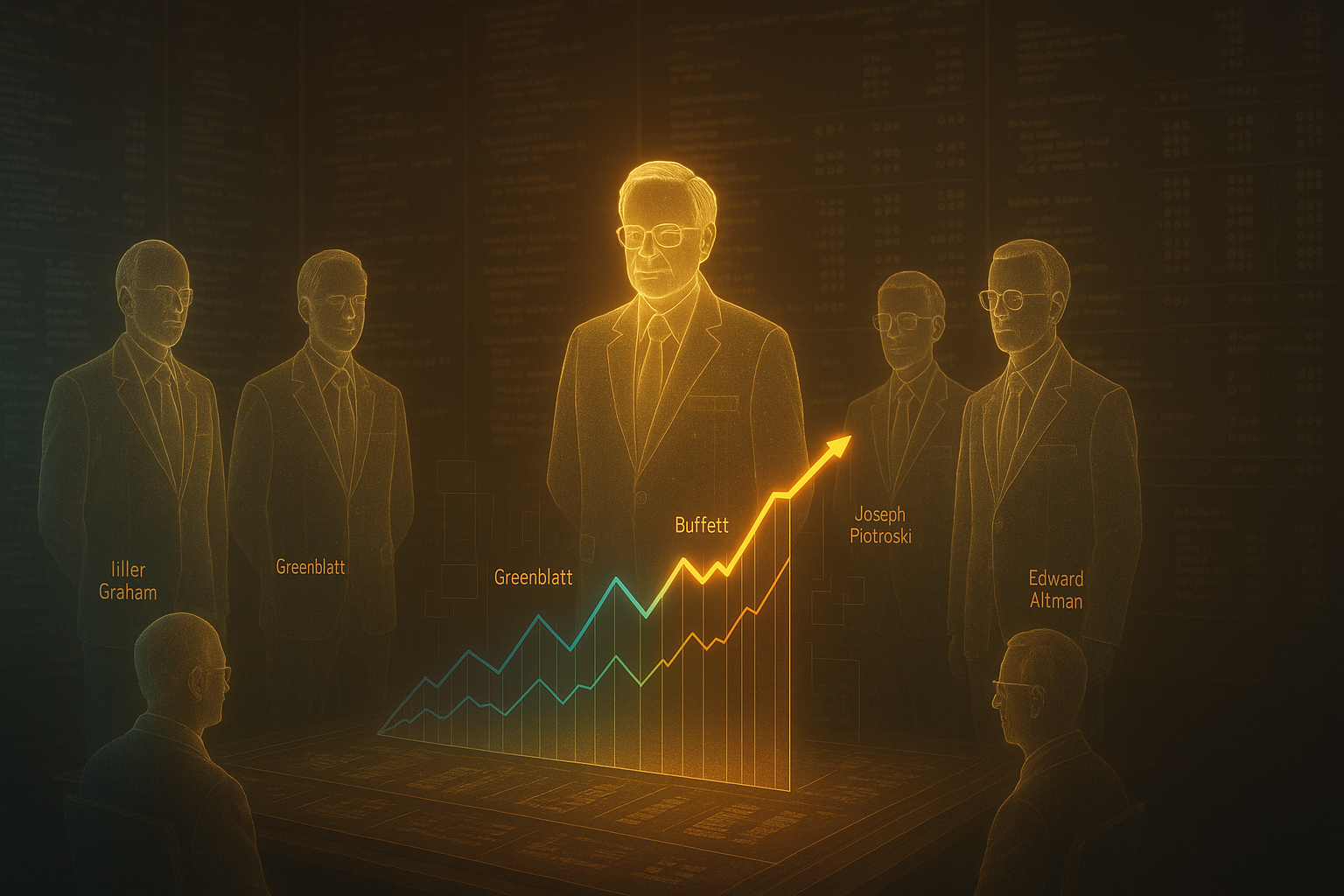
TL;DR A fresh study builds five prompt‑guided LLM agents—each emulating a legendary investor (Buffett, Graham, Greenblatt, Piotroski, Altman)—and backtests them on NASDAQ‑100 stocks from Q4 2023 to Q2 2025. Each agent follows a deterministic pipeline: collect metrics → score → construct a weighted portfolio. The Buffett agent tops the pack with ~42% CAGR, beating the NASDAQ‑100 and S&P 500 benchmarks in the window tested. The result isn’t “LLMs discovered alpha,” but rather: prompts can reliably translate qualitative philosophies into reproducible, quantitative rules. The real opportunity for practitioners is governed agent design—measurable, auditable prompts tied to tools—plus robust validation far beyond a single bullish regime. ...

October 9, 2025 · 5 min · Zelina
Cover image

When More Becomes Smarter: The Unreasonable Effectiveness of Scaling Agents

From repetition to reasoning When early computer-use agents (CUAs) appeared, they promised to automate tedious digital workflows—clicking through files, formatting reports, or organizing spreadsheets. Yet anyone who has tried them knows the frustration: sometimes they succeed spectacularly, sometimes they click the wrong button and crash everything. Reliability, not intelligence, has been the missing link. A recent paper from Simular Research, “The Unreasonable Effectiveness of Scaling Agents for Computer Use,” shows that scaling these agents isn’t just about more compute—it’s about how we scale. Their method, Behavior Best-of-N (bBoN), turns the brute-force idea of “run many agents and hope one works” into a structured, interpretable, and near-human-level solution. ...

October 9, 2025 · 3 min · Zelina
Cover image

Terms of Engagement: Building Trustworthy AI Agents Before They Build Us

As agentic AI moves from flashy demos to day‑to‑day operations—handling renewals, filing tickets, triaging inboxes, even buying things—the question is no longer can we automate judgment, but on what terms. This isn’t ethics-as-window‑dressing. Agent systems perceive, decide, and act through real interfaces (email, bank APIs, code repos). They can help—or hurt—at machine speed. Today I’ll argue three things: Alignment must shift from “answer quality” to action quality. Social agents change the duty of care developers and companies owe to users. We need a governance stack for multi‑agent ecosystems, not one‑off checklists. The discussion is grounded in the Nature piece by Gabriel, Keeling, Manzini, and Evans (2025), but tuned for operators shipping products this quarter—not a hypothetical future. ...

September 19, 2025 · 5 min · Zelina
Cover image

Tool Wars, Protocol Peace: What MCP‑AgentBench Really Measures

TL;DR MCP‑AgentBench is the first broad benchmark that evaluates language agents inside the Model Context Protocol (MCP) rather than with ad‑hoc function calls. It sets up 33 MCP servers with 188 tools and runs 600 goal‑oriented queries across six task patterns. Results flip a few assumptions: open‑source leaders (notably Qwen3‑235B‑A22B) can top the table under the ReAct style, while Claude 4 Sonnet shines with native tool‑calling. Token budgets matter: o3‑mini posts the best performance‑per‑token among big names. The meta‑lesson for builders: your agent’s interaction style must match the model and benchmarks must reward outcome, not ritual. ...

September 19, 2025 · 5 min · Zelina
Cover image

From PDF to PI: Turning Papers into Productive Agents

We’ve all met the paper that promises the moon—then hands you a README, a maze of conda environments, and a prayer. Paper2Agent proposes a different contract: don’t read me, run me. By converting a research paper (and its repo) into a Model Context Protocol (MCP) server that any LLM agent can call, it turns methods into tools, figures into reproducible tests, and “future work” into executable prompts. This isn’t another “Papers with Code” link farm. It’s a pipeline that (1) mines the repo/tutorials, (2) builds a pinned environment, (3) extracts single‑purpose tools with clear I/O, (4) tests them until they match the paper’s outputs, and (5) deploys the lot as a remote MCP server. Hook that server to your favorite coding/chat agent and you get a paper‑specific copilot that can reproduce, explain, and extend the work. ...

September 12, 2025 · 4 min · Zelina