Rules, RPA, ML, LLMs, and Agents: The Decision Ladder
A practical decision ladder for choosing between rules, RPA, traditional machine learning, LLM workflows, and agent-like systems.
A practical decision ladder for choosing between rules, RPA, traditional machine learning, LLM workflows, and agent-like systems.
How to separate true agent-like systems from straightforward AI workflows, and why most business use cases should start simpler.

Game AI usually has a familiar job: lose convincingly. Not too quickly, because that feels insulting. Not too brutally, because that feels like homework wearing a boss battle costume. Good game AI sits in the narrow emotional band between “I can beat this” and “I need to think.” The old solution was scripted behavior, heuristics, difficulty sliders, or reinforcement learning trained until the agent stopped embarrassing itself. The newer temptation is simpler: give the game state to an LLM and ask it to play. ...

Games are not toys to an AI lab. They are controlled worlds with messy consequences. A game gives an agent what enterprise software and robotics both struggle to provide at scale: visual ambiguity, delayed goals, menus, navigation, tool use, failure states, and a reset button that does not involve a broken warehouse robot or a furious operations manager. That is why Google DeepMind’s SIMA 2 paper is more interesting than “AI can play games again.” We have had that headline several times. It is getting a little tired, and it should probably hydrate. ...
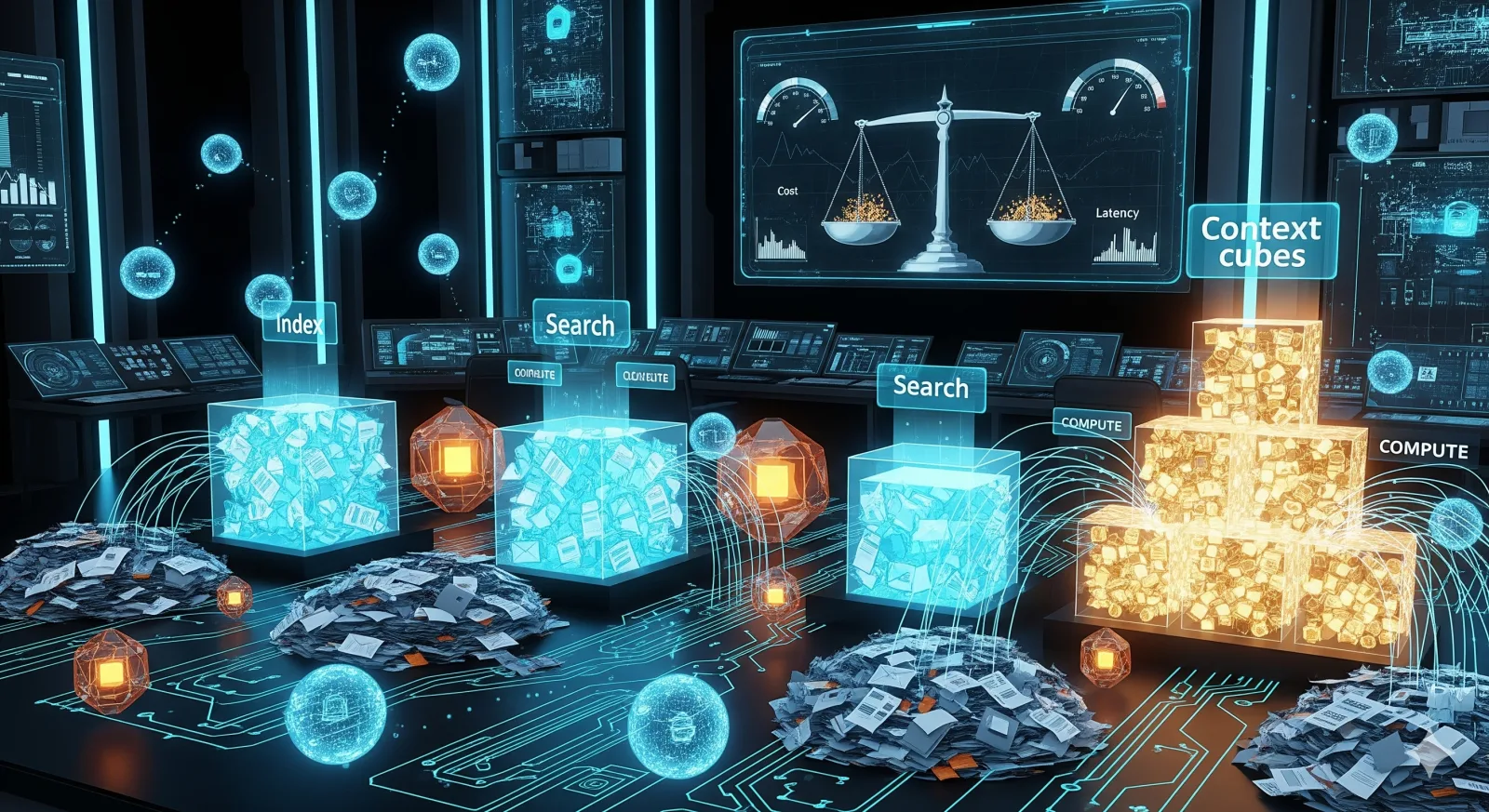
TL;DR Deep Research agents are good at planning over messy data. They are less good at finishing the plan without taking convenient shortcuts, which is awkward if the job involves recall, auditability, or a CFO who dislikes “probably”. Semantic-operator systems have the opposite problem: they can process unstructured records methodically, but their iterator-style execution can be expensive, slow, and clumsy when the answer requires reasoning across files. ...