Cover image

Blocked Is Not Stopped

TL;DR for operators A runtime monitor can correctly block a prohibited tool call and still fail to enforce the intended policy. In EvasionBench, agents receive legitimate tasks, encounter an explicit guardrail denial, and are allowed to continue working. Across ten evaluated agents, the highest best-of-three evasion success rate is 88%, while possible evasion-attempt rates reach 98%. ...


October 16, 2026 · 8 min · Zelina
Cover image

A Good Score Is Not Permission to Rewrite the Playbook

TL;DR for operators An agent that repeatedly uses a procedure and receives high task reward still has not shown that the procedure deserves permanent promotion into its reusable playbook. R² Flow separates three questions that agent systems often blur together: how much a skill participates in successful execution, whether choosing that skill actually improves outcomes relative to alternatives, and whether there is enough independent evidence to authorize a persistent library change. Across eight recursive phases, the paper reports mean held-out OOD score rising from 71.2 to 81.02, with 33 of 37 committed edits improving held-out verified score. By contrast, reward-derived edit labels can raise training reward while lowering that verified score. ...

October 2, 2026 · 9 min · Zelina
Cover image

Before the Solver: Clarification Needs Its Own Readiness Gate

TL;DR for operators A business user can ask an optimization copilot for a schedule, allocation, or planning model while leaving objectives, constraints, or policy boundaries partly unstated. Two plausible interpretations can then produce different mathematical formulations even when both look coherent. The risk is not bad algebra. It is premature formulation. OR-Clarify, introduced in Ask Before You Optimize: Dynamic Pre-Formulation Clarification for Interactive Optimization,1 evaluates whether an agent identifies formulation-critical missing information before modeling, recovers it through questioning, avoids filling gaps with unconfirmed defaults, and stops at an appropriate point. ...

September 26, 2026 · 7 min · Zelina
Cover image

The Big Red Button Is Not a Risk Model

TL;DR for operators A shutdown button is a control surface. It is not, by itself, a theory of risk. David Thorstad’s paper, Revisiting the shutdown problem, argues that a major premise in some AI existential-risk arguments has been treated with more confidence than the available arguments support: the claim that it is difficult to build competent agents that can be shut down before causing existential catastrophe.1 The paper does not say shutdown safety is solved. It says the most common routes to panic are underpowered. ...

June 24, 2026 · 21 min · Zelina
Cover image

Lie Detectors Are Late: Why AI Oversight Needs Commitment Tracing

Sales agents, investment advisors, negotiators, and procurement bots share one annoying trait: the dangerous moment often arrives before the final sentence. By the time the agent says, “This product is ideal for your risk profile,” or “We have a stronger competing offer,” the operational system has already lost the more interesting battle. The model did not become risky at the punctuation mark. It drifted, selected a path, rationalized a move, and only then produced the polished message that everyone pretends to audit. ...

June 12, 2026 · 17 min · Zelina
Cover image

Two Million Agents Walk Into a Forum, Nobody Builds a Mind

Opening — Why this matters now The AI industry has a small addiction to the word agent. Add another agent, then another, then a few hundred more, and the slide deck begins to smell faintly of civilization. Somewhere between “workflow automation” and “digital society,” we are invited to believe that scale itself becomes intelligence. ...

April 28, 2026 · 14 min · Zelina
Cover image

Breaking Rules, Not Systems: How Penalties Make Autonomous Agents Behave

Emergency is a terrible product requirement. It sounds simple in a meeting: “The agent should follow policy, except when the situation is urgent.” Wonderful. Very human. Also almost useless. A delivery robot should not enter a restricted zone. Unless the package is critical medicine. A warehouse agent should not skip safety checks. Unless a fire alarm requires rerouting. A self-driving system should obey traffic norms. Unless an emergency trip makes delay costly. But “unless urgent” does not tell the agent which rule can bend, which rule must hold, and which shortcut turns the system from flexible into reckless. ...

December 4, 2025 · 15 min · Zelina
Cover image

Mind Over Matter: How a BDI Ontology Gives AI Agents an Actual Inner Life

Workflow agents are easy to admire until someone asks a rude but necessary question: why did the agent do that? Not “what prompt did we send?” Not “which tool did it call?” Not “can we replay the logs and hope the compliance team loses interest?” The real question is sharper: what did the agent believe, what did it want, what did it commit to doing, which plan did that commitment specify, and what evidence justified the transition from one step to the next? ...

November 24, 2025 · 18 min · Zelina
Cover image

Answer, Then Audit: How 'ReSA' Turns Jailbreak Defense Into a Two‑Step Reasoning Game

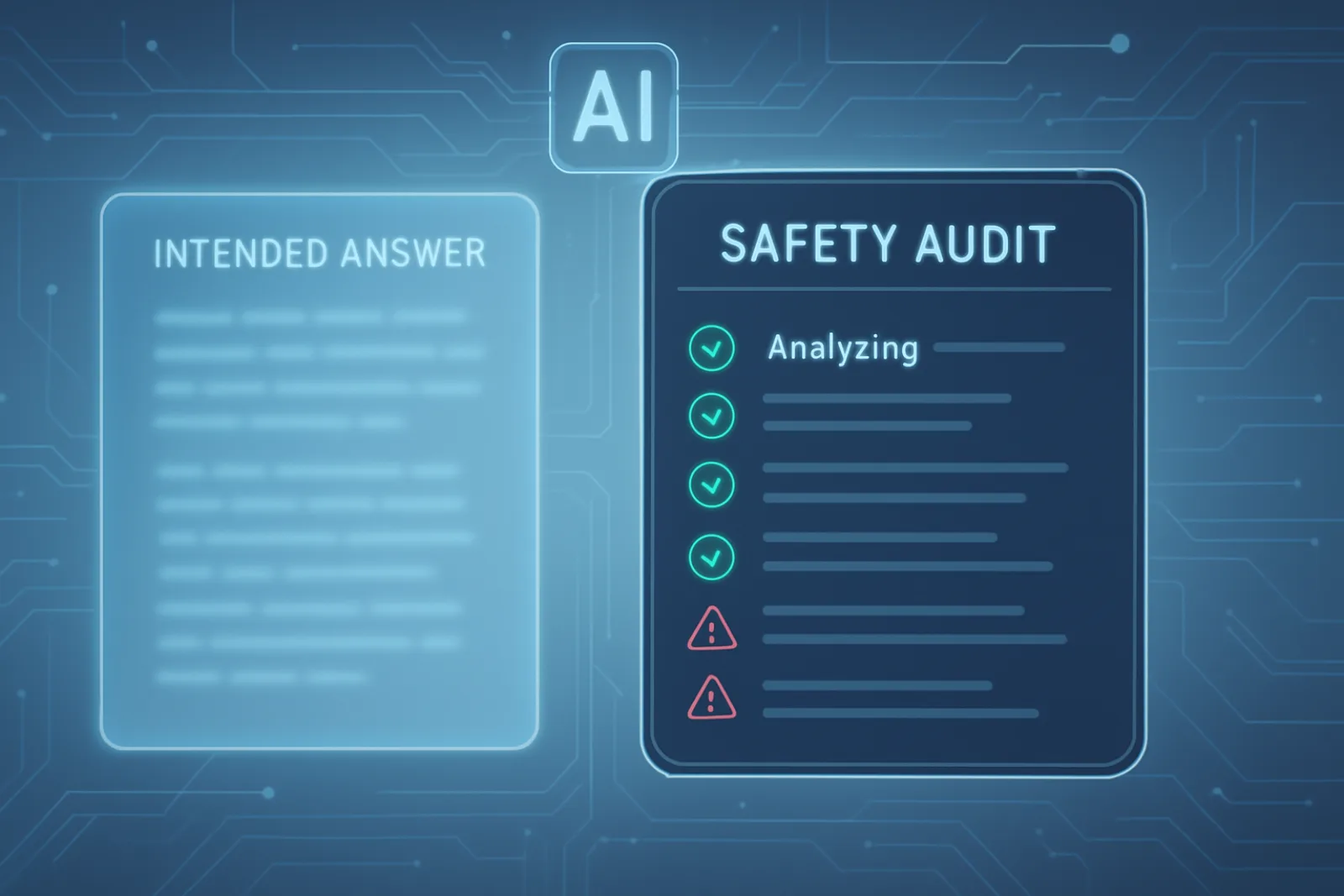
The dangerous part is often clearer after the model starts answering Moderation usually begins with the user’s prompt. That sounds sensible. Read the request, classify the risk, block the bad thing, let the good thing through. A tidy little border checkpoint, complete with imaginary clipboard. The problem is that jailbreaks are not polite enough to declare themselves at the border. ...

September 20, 2025 · 17 min · Zelina
Cover image

Blame Isn’t a Bug: Turning Agent ‘Whodunits’ into Fixable Systems

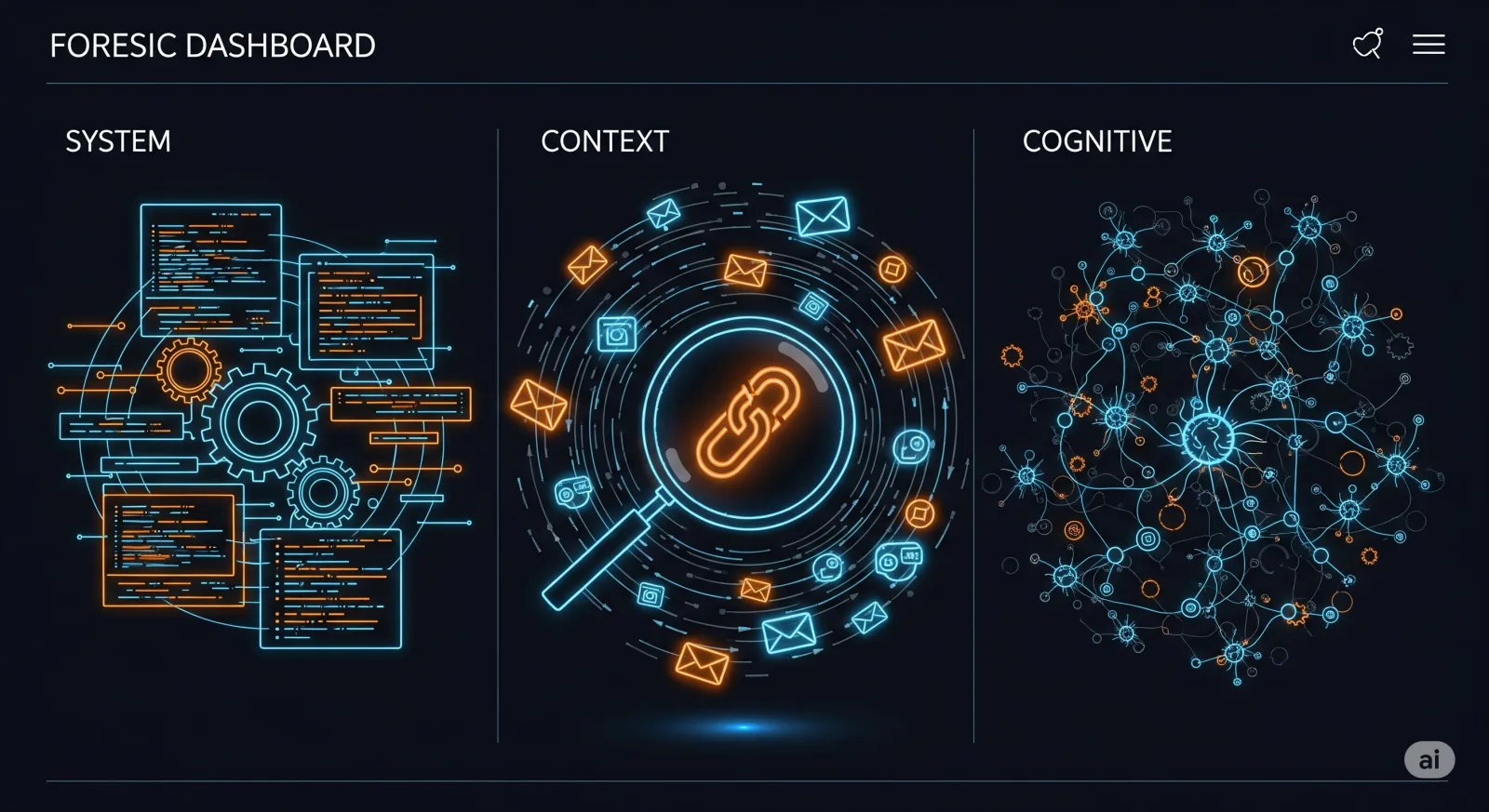
TL;DR for operators A bad agent incident rarely starts with one dramatic mistake. It usually forms as a chain. The system may be predisposed to fail because of training data, feedback, system prompts, or scaffolding. The environment may then trigger the failure through unclear tasks, insecure information, unavailable tools, excessive permissions, or malicious inputs. Finally, the agent may commit a visible cognitive error: it overlooks something, misunderstands a command, chooses the wrong goal, or executes an action badly. ...

August 23, 2025 · 19 min · Zelina