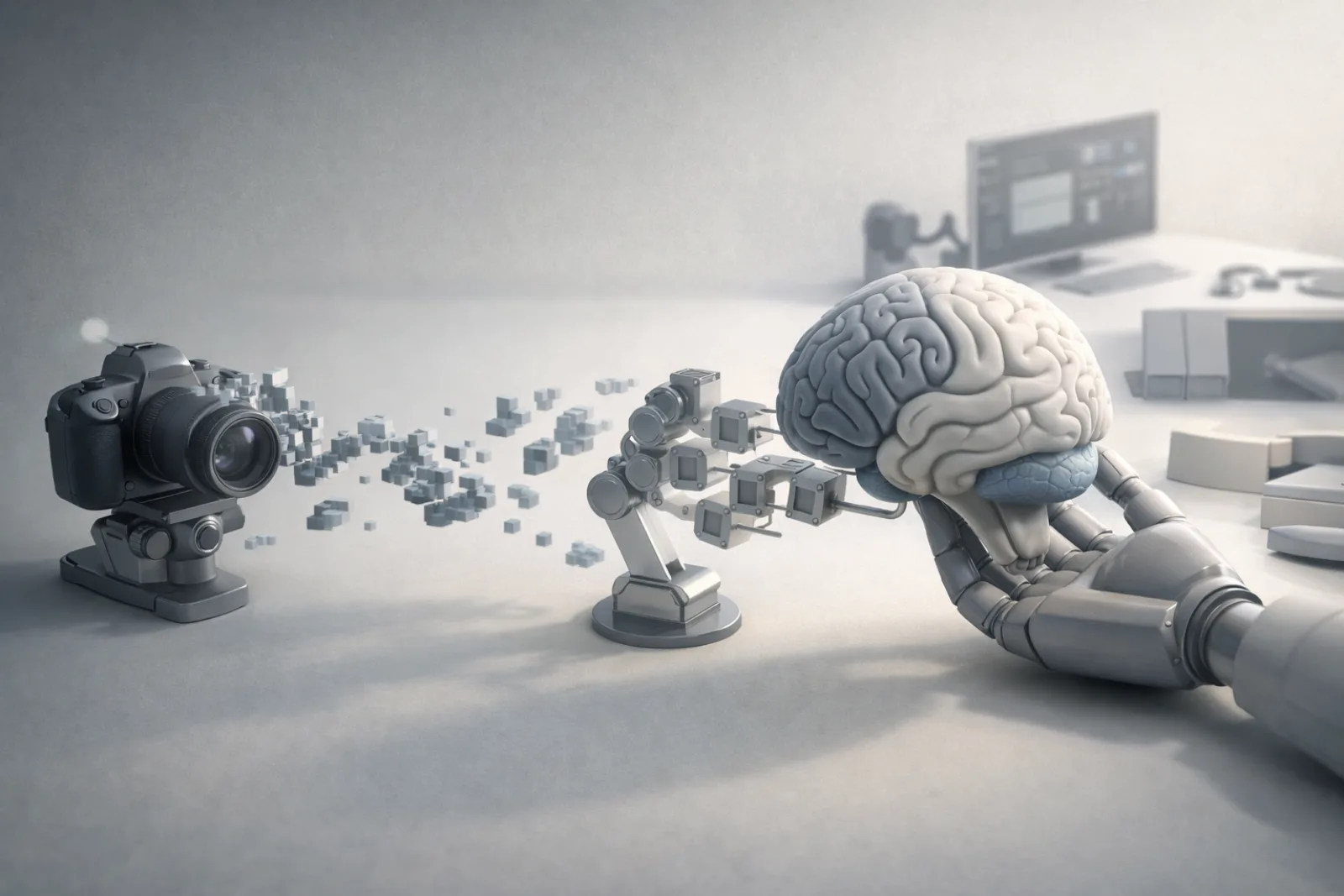
Eyes Wide Compute: Why Physical AI Needs Better Senses, Not Bigger Models
Camera first. Model second. That is not how most AI roadmaps are written. The usual enterprise recipe is tidier: pick a bigger model, add a cloud endpoint, compress something if the bill becomes embarrassing, then declare the system “edge-ready.” This works tolerably well when the input is a clean document, a database row, or an already-captured image. It works less well when the input is a moving camera in a dark warehouse, a microphone beside a noisy motor, a tactile pad on a robot gripper, or smart glasses trying to understand the world before the battery starts writing its resignation letter. ...