
When AI Reviews AI: Turning Foundation Models into Safety Inspectors
A mechanism-first reading of how REACT and SemaLens use LLMs and VLMs to make safety-critical AI systems more inspectable without pretending that AI can certify itself.
A mechanism-first reading of how REACT and SemaLens use LLMs and VLMs to make safety-critical AI systems more inspectable without pretending that AI can certify itself.

A mechanism-first look at how copyright-detection pipelines turn LLM memorization into an operational audit signal, without pretending it is courtroom proof.

A mechanism-first guide to why AI-agent evaluation should measure structured coverage across benchmark families, not worship individual benchmark scores.
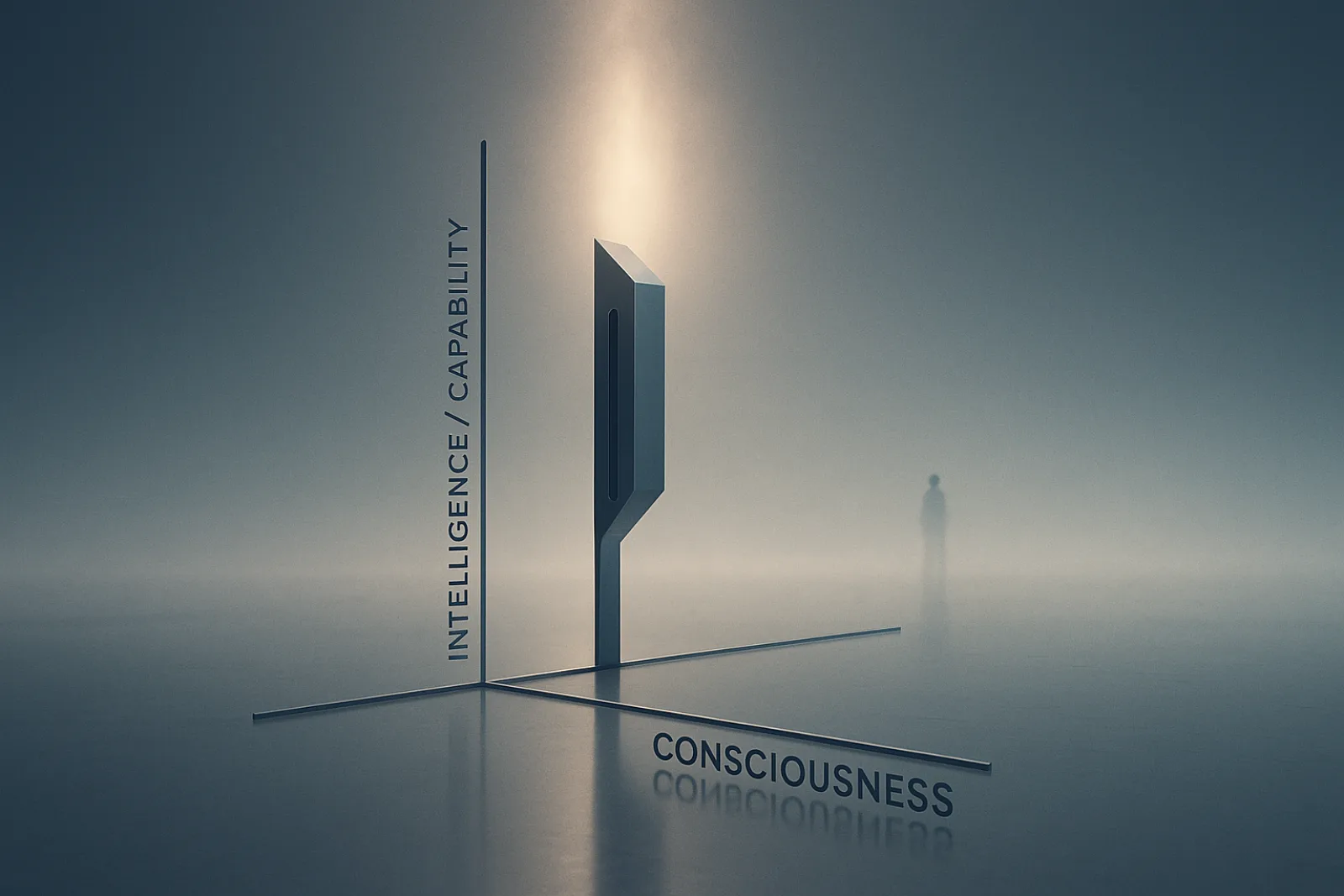
A mechanism-first reading of why AI existential risk depends more on capability and objectives than on whether a machine has inner experience.

A mechanism-first reading of SimDiff, showing how a simpler diffusion model turns probabilistic sample diversity into stronger time-series point forecasts.

A careful look at why generic vision–language models fail on EEG sleep staging, and what task-specific visual alignment changes for clinical AI.

AutoEnv shows why agent learning needs diverse environment testing, adaptive learning methods, and fewer victory laps from single-demo performance.

A mechanism-first reading of how deterministic register automata can turn black-box sequence models into interpretable, robustness-checkable surrogates.

A mechanism-first reading of PRInTS, a reward-modeling approach that improves long-horizon information-seeking agents by scoring information gain and compressing trajectory history.

A mechanism-first reading of why LLM-based agents need explicit architectures, communication rules, incentives, norms, trust models, and institutional supervision before they can become reliable business systems.