TL;DR for operators
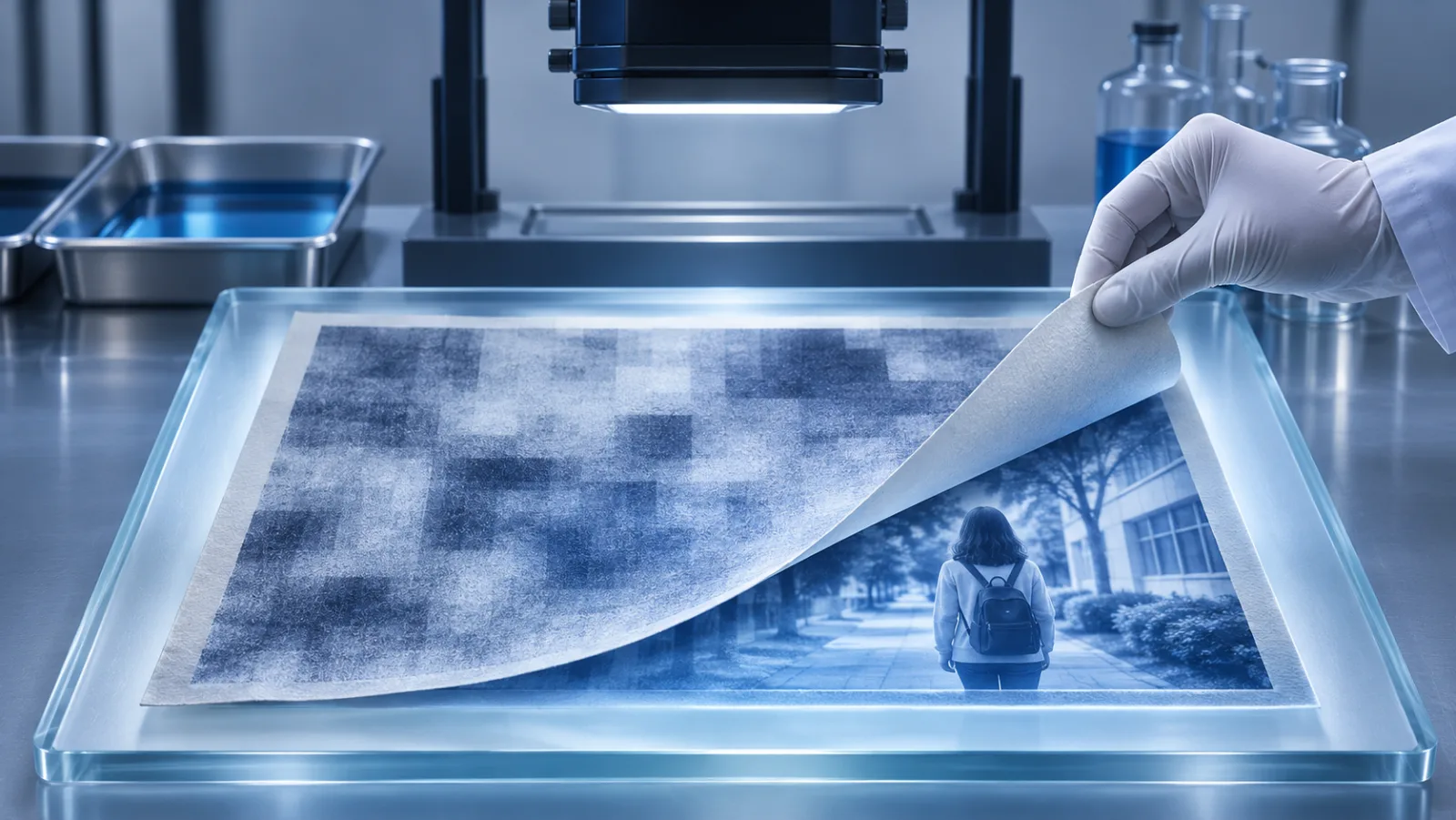
FedPix1 changes what mobile devices contribute to federated image classification. Rather than training local models, clients perform a single encoding pass and upload compact image-format representations with their labels. The server trains the classifier and updates the shared encoder without receiving the original images.
On CIFAR-10, measured client runtime falls from 1,223 seconds with FedAvg to 49 seconds with FedPix, while classification accuracy remains comparable at 65.98% and 65.63%, respectively. The architecture is attractive when local computation is expensive.
Its privacy properties are less settled. An adaptive reconstruction attacker retrieves substantially more visual information than the standard inversion procedure. Explicit privacy-oriented losses also produce inconsistent results across datasets. Teams can use FedPix to explore cheaper distributed image learning, but compressed outputs should remain subject to reconstruction testing, label-governance controls, and assessment of repeated disclosures.
A compressed image can still contain recoverable information
A mobile application wants to improve an image classifier using photographs held on customer devices. Uploading the photographs creates an obvious disclosure risk. Keeping them local and training models on each device reduces raw-data transmission, but imposes computation and coordination costs.
An alternative is to send a smaller representation that looks substantially different from the original photograph. This makes the transmitted information easier to inspect and potentially harder to reconstruct. The remaining question is how much information someone with the right tools can recover.
FedPix’s results illustrate the distinction. On FashionMNIST, its standard model-inversion attack produces reconstructed images with a structural similarity index (SSIM) of 0.26. An adaptive restoration model trained specifically against the encoder raises SSIM to 0.56. Peak signal-to-noise ratio (PSNR) increases from 8.19 to 13.81 dB.
Both metrics measure image similarity, with higher values indicating closer reconstruction. The adaptive attack’s improvement means that information invisible in a direct representation, or missed by a standard recovery procedure, can remain accessible to a more specialized attacker.
This is the central deployment tension: FedPix can preserve useful classification information at much lower client cost, but visual dissimilarity does not reliably establish how little information the server can recover.
The encoder learns without seeing the original images
FedPix’s principal technical contribution addresses a difficult training constraint. A privacy-oriented encoder normally needs the original image to learn which information to preserve and which to suppress. The server cannot use those originals if clients are prohibited from sharing them, while training the encoder locally would reintroduce significant device computation.
FedPix separates the work.
Each client runs a shared convolutional encoder once, converting its image into a smaller, three-channel image-format representation. The client uploads this representation and its label. The server upsamples the representations and trains a classifier using the received labeled examples.
The harder part is improving the encoder. FedPix constructs a training path using only information already available at the server:
- Enlarge an uploaded compressed representation.
- Pass the enlarged image through the encoder again.
- Upsample the new compressed output and evaluate it with the server classifier.
- Update the encoder while keeping the classifier fixed, using classification consistency and penalties against similarity between successive representation stages.
This upsample–recompress procedure allows gradients to update the encoder without requiring access to the original photographs. Its classification-consistency loss uses examples that the current classifier already predicts correctly, helping preserve established task performance.
The distinction matters: the server optimizes against a surrogate constructed from uploaded representations, not directly against the original images. The paper does not establish equivalence between these objectives.
Clients receive updated encoder parameters across communication rounds, but no longer perform iterative local backpropagation. Most optimization shifts to the server.
Less device computation, with comparable classification accuracy
The main benchmark compares FedPix against five federated approaches across four public image datasets. It uses ten fully participating clients, Dirichlet-partitioned data with concentration parameter 0.5, and ten repeated runs.
| Dataset | FedPix accuracy | FedAvg accuracy | FedPix client runtime | FedAvg client runtime |
|---|---|---|---|---|
| BloodMNIST | 82.24% | 74.35% | 13 s | 241 s |
| CIFAR-10 | 65.63% | 65.98% | 49 s | 1,223 s |
| FashionMNIST | 89.97% | 87.12% | 63 s | 1,438 s |
| MNIST | 99.18% | 97.78% | 48 s | 1,107 s |
Source: Section 4.1, Table 1. Values are reported means; dispersion and architecture-specific conditions are omitted here for readability.
FedPix has higher mean accuracy than FedAvg on three datasets and achieves a roughly 96.0% client-runtime reduction on CIFAR-10. This supports a specific engineering proposition: training over uploaded representations can substantially reduce client computation without necessarily sacrificing classification accuracy.
The appendix adds robustness evidence. On CIFAR-10, FedPix remains between 63.42% and 65.34% accuracy as the Dirichlet concentration parameter ranges from 0.01 to 1.0. FedAvg falls to 11.09% at the most heterogeneous setting but reaches 71.28% at 1.0. A separate client-count experiment finds FedPix near 65% accuracy from one to 100 clients.
These checks indicate stability under the simulated partitions, not guaranteed performance under real-world domain shifts.
The mobile feasibility test provides another useful boundary. A CPU-only FP32 encoder on a Snapdragon 660 Android device processes 100 photographs at an average of 849.33 milliseconds per image, producing 768-byte representations.
The reported 4,274-fold data reduction compares original photograph files with representation payloads. Relative to the preprocessed FP32 input tensor, it is 256-fold. Neither comparison includes encoder distribution, labels, or communication-protocol overhead. The measured client-runtime advantage therefore should not be interpreted as an equivalent end-to-end deployment speedup.
More privacy losses do not consistently mean less reconstruction
FedPix’s encoder combines classification cross-entropy with SSIM and PSNR suppression. The intention is to retain information useful for classification while making successive representations less visually similar.
Its ablation study shows that these objectives do not always cooperate.
On CIFAR-10, removing both reconstruction-suppression terms produces synthetic SSIM of 0.3163, versus 0.3751 for the complete objective. Reconstructed SSIM is also lower without those terms: 0.3633 versus 0.4166. Classification accuracies are 65.68% and 66.66%, respectively.
On FashionMNIST, the complete objective performs better on synthetic similarity measures, producing SSIM of 0.1089 versus 0.1404 without the suppression terms.
These are ablation results from Section 4.4, not replacements for the separate main benchmark. Their purpose is to isolate training components. They suggest that the capacity bottleneck and explicit reconstruction penalties contribute differently across datasets.
Representation size supplies a more direct capacity trade-off. On CIFAR-10, increasing the compressed spatial dimension from 4 to 24 raises classification accuracy from 37.10% to 65.10%. The smallest representation also has low measured similarity to the source, although privacy metrics do not vary strictly monotonically with capacity.
For model engineers, representation dimensions and loss weights therefore require separate tuning. The complete training objective cannot be assumed to deliver the strongest measured reconstruction resistance.
Reconstruction resistance depends on the attacker
The adaptive test in Appendix I is particularly consequential because it changes the attacker’s capabilities rather than merely adjusting FedPix’s training settings.
The attacker knows the encoder parameters and trains a ResUNet restoration model using auxiliary images from the same distribution. Across all four evaluated datasets, this approach improves PSNR and SSIM and reduces LPIPS relative to standard model inversion.
The result does not establish a worst-case reconstruction limit. It demonstrates that the standard attack understates what at least one more specialized attacker can recover.
The paper also reports shadow-model membership-inference experiments. On CIFAR-10, the tested FedPix configurations produce membership-inference accuracy around 49–58%. These results characterize one attack procedure; they cannot exclude stronger membership attacks or leakage of specific attributes.
For security teams, the transmitted representation remains information-bearing data. An image-format preview may help a user understand what is being transmitted, but the study does not demonstrate that users can recognize all sensitive information that a trained restoration model could recover.
The theoretical privacy–utility separation has specific assumptions
A classifier may require substantially less information than full image reconstruction. FedPix formalizes this possibility through an idealized model that separates image information into label-relevant task dimensions and independent nuisance dimensions.
Under an orthogonal Gaussian task–nuisance model, the capacity theorem establishes that a suitably chosen linear projection can retain Bayes-optimal classification performance when the representation dimension is at least the minimal task-relevant dimension. Remaining nuisance information can be discarded, increasing reconstruction error.
A separate classifier-sensitive distortion bound explains why visually substantial changes may have limited effect on classification loss when they occur along directions to which the classifier is relatively insensitive.
These results clarify why selective compression could work. They do not prove that FedPix’s nonlinear encoder identifies the required task subspace, reaches the theoretical optimum, or guarantees privacy for real photographs.
The deployment boundary is information disclosure
Cognaptus inference: For mobile and federated image-classification teams, FedPix is a credible architecture candidate when local optimization is a substantial cost and a central server can perform iterative training over uploaded representations.
The architecture decision should be separated from authorization to disclose those representations. Before production use, a security team would need application-specific adaptive reconstruction tests, assessment of sensitive-attribute leakage, and controls for labels transmitted in the clear. Repeated uploads also require attention because FedPix does not provide a formal accounting mechanism for cumulative information leakage.
There is no differential privacy guarantee, and comparisons with differential privacy methods are not matched on equivalent formal privacy budgets. Nor do public benchmark results establish performance or privacy protection for real personal-information workflows.
The strongest conclusion is therefore an architectural one. FedPix demonstrates that substantial client-computation savings can coexist with competitive classification accuracy when devices transmit learned image representations. It also shows why the information remaining inside those representations must be measured against capable attackers before the interface is treated as privacy-preserving.
Cognaptus: Automate the Present, Incubate the Future.
-
Jingwei Zhao and Tiantong Sun and Yuanyuan Song and Jinhuan Guo and Zishuo Wei and Shengyu Huang and Ziyuan Ren and Wei Chen and Xiaojin Zhang (2026). FedPix: Learning What to Share with Less Leakage in Federated Intelligence. arXiv:2610.21194. https://arxiv.org/abs/2610.21194 ↩︎