TL;DR for operators
A team with an expensive research workflow faces a recurring choice: keep paying for the full workflow on every report, or use it to teach a cheaper system how to reproduce much of its behavior. O-Researcher shows why the second option is plausible.1 With the same GPT-5 model, changing research execution from sequential to parallel raises the reported Overall score from 42.92 to 49.60, while Comprehensiveness rises from 40.59 to 49.61. Workflow structure itself is contributing capability.
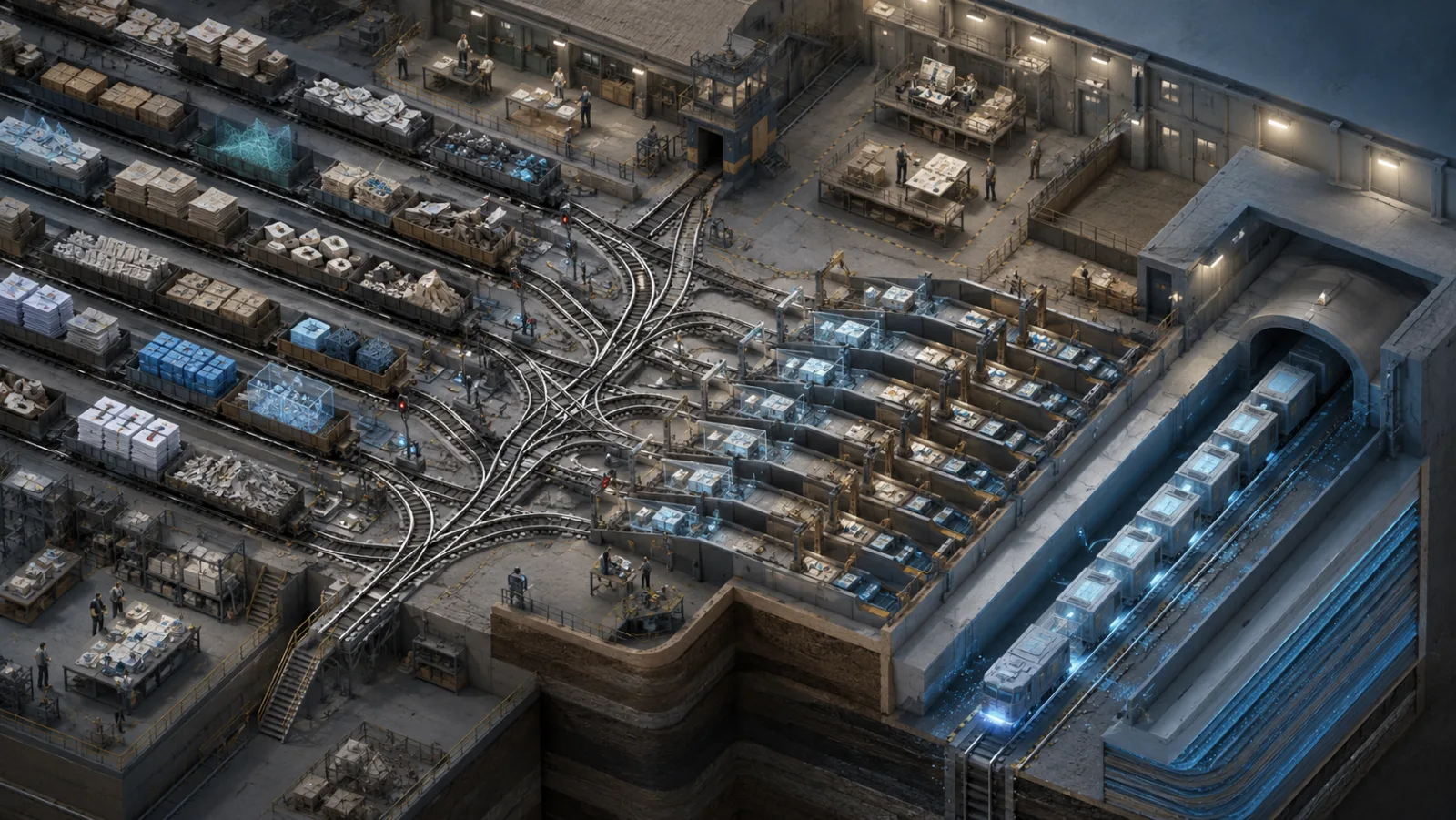
The paper turns that capability into reusable training experience. Its collaborative workflow records planning, tool use, observations, synthesis, and final answers, then uses those trajectories to train an open-weight model. The expensive workflow therefore becomes an upstream training-data factory rather than something that must remain permanently in the serving path.
Imitation is not sufficient by itself. Supervised fine-tuning improves report quality and effective citations, but Citation Accuracy falls from 44.27 for the backbone to 29.13 after SFT. A second reinforcement-learning stage improves report quality further and partially repairs Citation Accuracy to 31.99, without restoring the backbone level.
For operators, the decision becomes an allocation problem: whether scarce compute and engineering effort should go to synthetic trajectory production, supervised distillation, reinforcement learning, retrieval, longer research execution, or repeated multi-agent inference. The paper suggests these are competing uses of budget at the margin, not dimensions that should all be maximized.
A capable workflow does not have to stay in the serving path
Suppose two systems use the same underlying model but organize the research process differently. If one performs materially better, some of the capability is coming from the workflow rather than the model weights alone.
The paper tests this directly in an ablation using GPT-5. Sequential research execution receives an Overall score of 42.92. Parallel execution reaches 49.60. Comprehensiveness rises from 40.59 to 49.61, while Insight rises from 38.58 to 48.69.
This experiment is best read as a workflow ablation, not as evidence about O-Researcher’s trained weights. Its purpose is to isolate whether decomposing a research problem into parallel sub-queries can improve the research process while holding the underlying model relatively stable.
That matters operationally because a productive workflow can be treated as a source of reusable experience.
O-Researcher starts from 5,000 research queries drawn from several datasets plus synthetically generated topics. A planner decomposes each query into relatively independent sub-queries. Different models conduct repeated planning, tool use, observation, and reporting in parallel. Their sub-reports are then aggregated into a final answer.
Crucially, the system keeps the process rather than only the answer.
The retained examples include explicit representations of workflow control, reasoning, tool actions, observations, subtask answers, and the final response. Three candidate trajectories are generated per query, then filtered using structural checks, an LLM judge, and human spot-checking. More than 3,500 instruction-response pairs remain for supervised training.
This is the paper’s central architectural contribution: expensive collaboration becomes an upstream producer of long-horizon training examples.
Distillation transfers research behavior, but it also transfers a grounding problem
The main benchmark evidence shows that this procedure can teach a single model substantially richer research behavior.
On DeepResearch Bench, the Qwen-2.5-72B-Instruct backbone scores 33.38 on RACE Overall. After supervised fine-tuning on the synthetic trajectories, O-Researcher-SFT reaches 46.24.
The change is particularly visible in research depth and evidence production. Effective Citations increase from 8.96 to 22.63, while the reported Depth score rises from 23.41 to 46.84.
But citation accuracy moves in the opposite direction:
| Model stage | RACE Overall | Citation Accuracy | Effective Citations |
|---|---|---|---|
| Qwen-2.5-72B-Instruct | 33.38 | 44.27 | 8.96 |
| O-Researcher-SFT | 46.24 | 29.13 | 22.63 |
| O-Researcher-RL | 48.48 | 31.99 | 26.01 |
The SFT model learns to produce deeper reports with substantially more useful citations, yet a smaller share of its citations are judged accurate.
That distinction should matter to anyone evaluating enterprise research systems. “More grounded-looking output” and “more accurate grounding” are different metrics. Training a model to reproduce long research trajectories can increase evidence-seeking behavior without preserving the backbone’s citation precision.
The paper therefore adds a second training stage rather than treating imitation as sufficient.
Reinforcement learning is used to rebalance the learned workflow
Once the model has learned the structure of research from synthetic trajectories, O-Researcher applies GRPO-based reinforcement learning from AI feedback.
The reward combines three components: judged report quality receives a weight of 0.6, tool-use behavior 0.2, and formatting compliance 0.2. The tool component also bounds evidence-gathering behavior rather than rewarding unlimited calls.
The resulting O-Researcher-RL model raises RACE Overall from 46.24 after SFT to 48.48. Effective Citations increase again, from 22.63 to 26.01. Citation Accuracy recovers from 29.13 to 31.99.
That recovery is meaningful but incomplete. The final RL model still remains well below the backbone’s Citation Accuracy of 44.27.
So the paper supports a more specific interpretation than “RL fixes grounding.” The RL stage improves the balance produced by SFT under the paper’s reward and evaluation setup; it does not restore the original citation-accuracy level.
Difficulty filtering is part of this design. Candidate RL questions are answered eight times by the SFT model, and questions that appear uniformly easy or uniformly difficult are discarded. The intended role is to concentrate RL updates on tasks that still contain useful learning signal.
More context and more reasoning both encounter allocation limits
Two additional studies test how much research process should be preserved or executed.
The context-length analysis is a sensitivity test of trajectory completeness. The paper reports a substantial improvement when moving from 32k to 64k training trajectories, followed by diminishing gains between 64k and 128k. The evidence is consistent with needing enough context to retain the end-to-end research arc, rather than treating context length as an unlimited scaling lever.
The reasoning-step ablation shows a similar cost-performance issue:
| Reasoning budget | Overall |
|---|---|
| 5 steps | 48.80 |
| 10 steps | 49.61 |
| 20 steps | 50.76 |
Twenty steps produce the highest raw Overall score. The authors nevertheless choose ten as the practical operating point because additional steps introduce more retrieval context and cost without what they regard as a sufficiently large improvement.
“Optimal” therefore means a chosen performance-cost trade-off, not the maximum score observed in the table.
For operators, these tests point toward budget allocation rather than uniform scaling. The relevant question is whether the next unit of compute is better spent preserving a more complete trajectory, producing additional synthetic trajectories, improving RL signal, making another retrieval call, or keeping more multi-agent computation in the serving path.
The business case is upstream orchestration, not orchestration everywhere
What the paper directly shows: a multi-agent workflow can synthesize training trajectories that substantially improve an open-weight model on the tested deep-research benchmarks. Workflow structure, trajectory length, and reasoning budget all affect measured performance.
Cognaptus inference: organizations that already have high-quality but expensive research pipelines can evaluate those pipelines as training-data factories. A costly orchestration layer may be justified during data production even when its economics are unattractive for every production request. Serving can then shift toward a distilled model, with expensive orchestration reserved for difficult tasks, validation, or further data generation.
This also changes QA. Report richness, effective evidence use, and citation accuracy should be monitored separately. The SFT result demonstrates why: one can improve strongly while another deteriorates.
Where the evidence stops
The evidence is strongest for the reported benchmark configurations, not unrestricted research work.
DeepResearch Bench contains 100 research tasks, and the paper reports aggregate point estimates without confidence intervals, repeated-run variance, or significance tests. DeepResearchGym adds another 100-task evaluation, but its Commercial configuration permits systems to use their own proprietary search infrastructure. Differences there therefore reflect model-plus-retrieval stacks rather than model weights alone.
O-Researcher-72B performs strongly on that benchmark, including citation precision of 51.45—the highest among the listed systems—and scores of 100.00 for clarity and 99.3 for insight. But it does not lead every metric, and heterogeneous retrieval makes simple model rankings difficult to interpret.
The more durable contribution is therefore architectural rather than leaderboard-based. O-Researcher demonstrates a route for turning an expensive collaborative research process into supervised experience, then refining the distilled behavior with explicit rewards.
For organizations building research agents, that moves an important design decision upstream: before adding another agent to every production request, ask whether that agent would create more value by producing the training experience that eventually makes itself less necessary.
Cognaptus: Automate the Present, Incubate the Future.
-
Yi Yao and He Zhu and Piaohong Wang and Jincheng Ren and Xinlong Yang and Qianben Chen and Xiaowan Li and Dingfeng Shi and Jiaxian Li and Qiexiang Wang and Sinuo Wang and Xinpeng Liu and Jiaqi Wu and Minghao Liu and Wangchunshu Zhou (2026). O-Researcher: An Open Ended Deep Research Model via Multi-Agent Distillation and Agentic RL. arXiv:2601.03743. https://arxiv.org/abs/2601.03743 ↩︎